
23 Easy Ways to Know If Your Hair Is Thick

Figuring out whether your hair is thick or just looks full can be confusing, especially when every product bottle seems to use a different definition. Real hair thickness comes down to two things: how many strands grow on your head and how wide each strand is. Instead of guessing, you can run a few simple checks at home with things you already own, like a measuring tape, an elastic band, or just your fingers. These 23 easy ways help you read the signs your hair gives you every single day. Fine haired readers often compare with volume boosting layered hairstyles for thin hair.
The Ponytail Circumference Test
Gather all your hair into a smooth ponytail and wrap a soft measuring tape around its base to get a real number. A ponytail that measures around four inches or more usually means thick hair, while anything under two inches points to fine hair. This test is perfect for anyone who keeps switching between products meant for different hair types. Do it on dry hair for an honest reading, and measure close to the elastic rather than over loose ends so the number stays accurate. The contrast is clear in hairstyles for thin fine hair over 50 that aim to look fuller.
The Coin Comparison Check

No measuring tape at home? Hold your gathered ponytail next to a coin instead. If the bundle looks wider than a quarter across, you are most likely in thick hair territory. This quick visual trick works best for women who want a fast answer before buying shampoo or conditioner. Keep the ponytail snug and lay the coin right beside it rather than underneath, and you will get a surprisingly honest comparison in seconds without any special tools.
The Two-Strand Twist Test

Take a two-inch section of hair and twist it tightly between your fingers. Thick hair twists into a chunky rope that holds its shape and looks plump, while fine hair forms a skinny strand that slips apart. This little test suits anyone who air dries and wonders why some sections look fuller than others. Twist a section from the middle layers, not just the top, because density can vary, and that middle layer often tells the truest story.
The Scalp Visibility Test

Comb your hair flat and look at your scalp in a bright mirror. When your hair is truly thick, you can barely see the skin underneath because the strands pack together and cover everything. If wide lanes of scalp show through easily, the hair is more likely on the finer side. This check is ideal for women worried about thinning who want a baseline. Look at the crown and the part, since those spots reveal density changes most clearly.
The Drying Time Clue

Pay attention to how long your hair takes to dry completely. Thick hair holds onto water between its many layers, so it can take twice as long to air dry as average hair, and blow drying feels like a full arm workout. This sign helps busy women plan their wash days better. If your roots stay damp for hours after a wash while the ends feel dry, start diffusing or blow drying sooner, and section the hair so heat reaches the hidden layers.
The Elastic Wrap Count
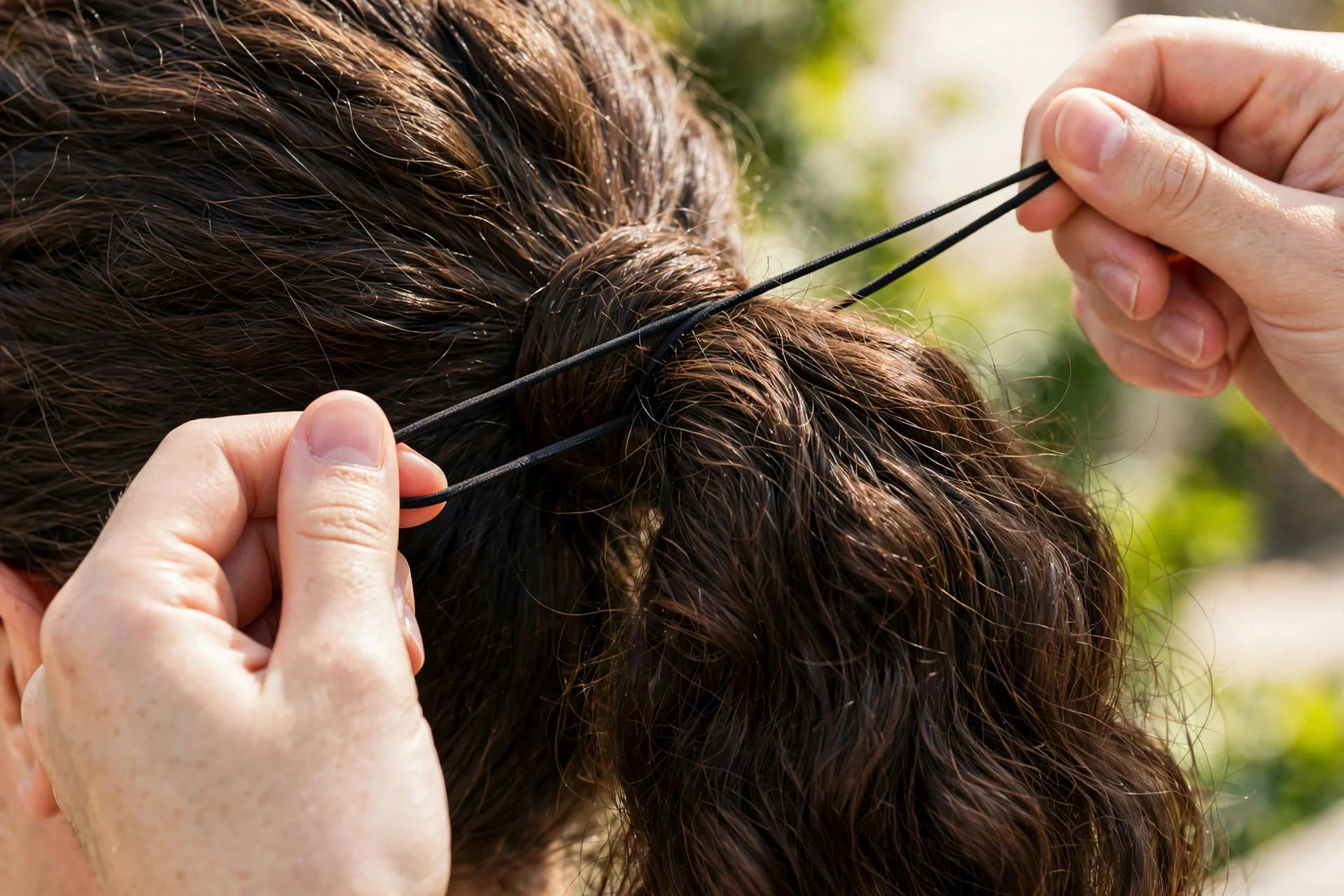
Notice how many times an elastic band wraps around your ponytail. With thick hair, a standard band only loops around twice before it feels stretched to its limit, while fine hair lets the same band wrap three or four times. This is a handy check for anyone shopping for hair ties. If your bands keep snapping or stretching out after a few uses, switch to thick spiral or fabric-covered ties made for heavy ponytails, and your hair will thank you.
The Braid Thickness Test

Braid your hair in a simple three-strand plait and look at the result. Thick hair builds a fat, rope-like braid that feels solid and heavy in your hand, while fine hair makes a slim braid that looks delicate. This test is great for women who love protective styles and want to pick the right braid size. Braid from the nape with even tension, and if your braid looks wider than your wrist, you are working with genuinely thick hair.
The Single Strand Roll

Pluck one shed strand and roll it between your thumb and finger. Thick individual strands feel wiry and easy to find, almost like a fine thread, while fine strands are so silky you can barely feel them. This test measures strand width rather than overall density, which matters for choosing heat settings. If you can clearly feel the strand, you have coarse thick hair and should use higher heat protection and richer formulas to keep it smooth.
The Ponytail Dent Test
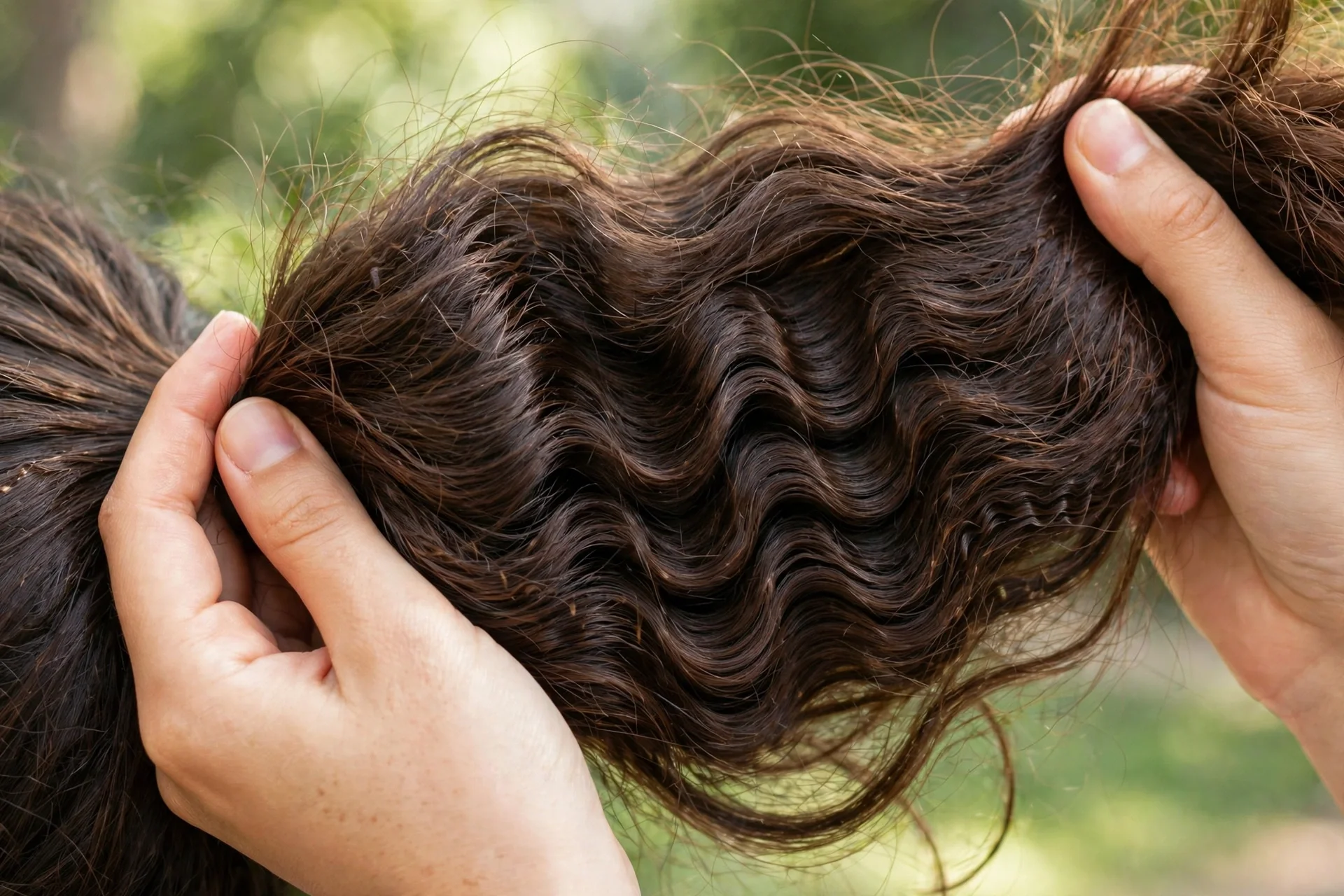
Take your ponytail down at the end of the day and check the dent the elastic left behind. Thick hair presses hard against the band, so the crease looks deep and stays visible for hours, while fine hair bounces back with barely a mark. This daily clue is perfect for women who wear their hair up constantly. To avoid a lasting dent, rotate your ponytail height each day and swap tight elastics for softer scrunchies on workdays.
The Shower Drain Clue

Look at how much hair collects in your shower drain after one wash. Everyone sheds daily, but thick-haired women pull out noticeably bigger clumps simply because they have more strands to lose. This sign comforts anyone who panics at drain hair. If you are shedding the same amount every wash with no thinning spots, it is just normal turnover. Only worry if the clumps suddenly grow much larger or your ponytail visibly shrinks over a few weeks.
The Messy Bun Size Test

Twist your hair into a quick messy bun and size it up. Thick hair creates a big, lofty bun with almost no effort, while fine hair needs backcombing or a donut filler to look half as full. This test is a favorite for women who want effortless volume. If your casual bun already looks salon-worthy, lean into styles that show off that natural fullness, and skip heavy texturizing sprays that can make thick buns feel stiff and crunchy.
The Part Line Test

Part your hair down the middle and study the line. On thick hair the part looks thin and closes up quickly because dense strands fall over it, while on fine hair the part stays wide and the scalp shows clearly. This check helps women choosing between volumizing and smoothing products. If your part keeps disappearing by midday, your density is doing the volumizing for you, so pick lightweight formulas that control frizz instead of adding more body.
The Heat Styling Time Test

Time how long it takes to straighten or curl your whole head. Thick hair demands small sections and multiple passes, so a full style can easily take forty-five minutes or more, while fine hair finishes in half the time. This is the test that matters most for women deciding whether to invest in professional styling tools. Work in thin layers from the bottom up, and always use a heat protectant, because thick hair hides heat damage deep inside where you notice it late. If your hair feels weak as well as thick, hair damage repair treatments can help restore it.
The Product Appetite Test
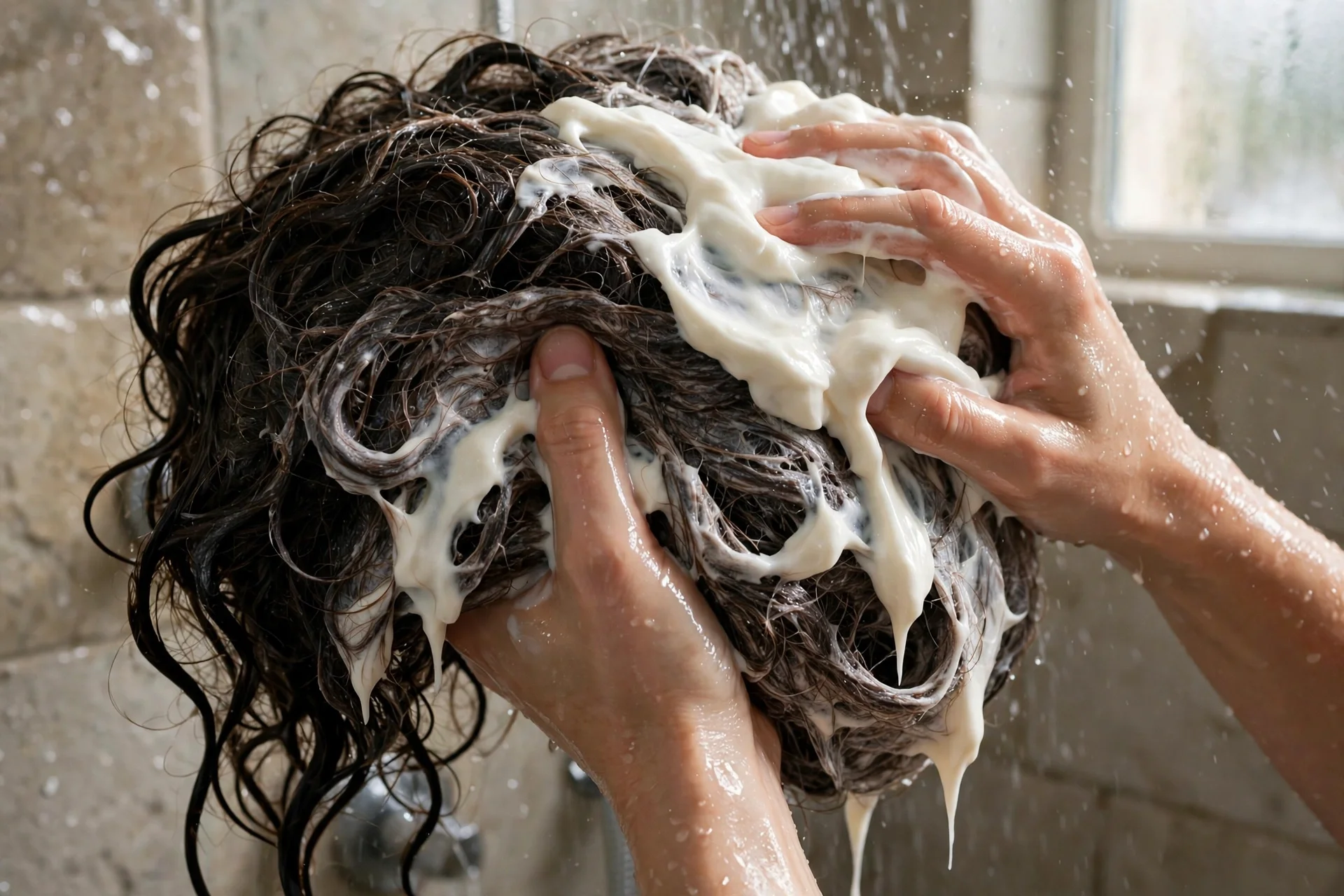
Notice how much conditioner or mask you use per wash. Thick hair drinks up product, so a coin-sized amount barely covers the surface, and you need two or three times more than the bottle suggests. This sign helps anyone wondering why their products run out so fast. Focus conditioner on the mid lengths and ends where thick hair is driest, and buy salon-size bottles, because regular sizes will only last you a few weeks at best.
The Brush Fullness Check

Look at your brush after a thorough brushing session. Thick hair leaves the bristles packed with strands after just one pass, while fine hair barely fills the brush. This quick visual suits women who brush daily and wonder about their density. Clean your brush weekly, because packed bristles tug more and cause breakage, and consider a wide-tooth comb for detangling wet hair since it moves through thick hair with much less pulling.
The Wind Test

Step outside on a breezy day and watch how your hair behaves. Thick hair is heavy enough to resist the wind and mostly keeps its shape, while fine hair flies everywhere with the slightest gust. This fun outdoor test helps women pick the right hold level in styling products. If the wind barely moves your hair, you can skip strong-hold sprays and use a light cream instead, since your natural weight already keeps styles in place.
The Updo Weight Test

Put your hair in a high ponytail or updo and notice how it feels. Thick hair has real weight, so by evening your scalp may ache and the style slides down under its own heaviness. This test matters for women who get headaches from updos. Distribute the weight with two stacked ponytails instead of one, or anchor styles with extra pins at the base, and your updos will stay comfortable and secure all day long.
The Morning Pillow Test

Check your hair when you wake up. Thick hair springs back into big, voluminous waves overnight, while fine hair usually lies flat and needs restyling. This morning clue delights women who want wash-and-go volume. If you wake up with natural body, protect it with a silk pillowcase to cut frizz, and refresh with a little water on the ends instead of a full wash, because your thickness already gives you the volume most people chase.
The Square Inch Count

Part a one-inch square section of hair at your crown and try to count the strands. With thick hair the count climbs so high that you give up quickly, while fine hair lets you count with relative ease. This hands-on test is perfect for detail-loving women who want proof, not guesses. Do the count on clean, dry hair near the crown for consistency, and remember that a high count means you should choose products labeled for thick or dense hair.
The Thinning Shears Question

Think about what your hairstylist does at every appointment. If they regularly reach for thinning shears or spend time removing bulk, that is a professional verdict on your thickness. This clue helps women who trust their stylist more than home tests. Ask your stylist directly what they notice about your density, and book trims a little more often, because thick hair grows out heavy and shapeless faster than fine hair does.
The Clip Struggle Test

Try holding all your hair up with a small claw clip. Thick hair overwhelms regular clips, popping them open or letting chunks spill out, while fine hair stays put easily. This everyday frustration is a surprisingly reliable sign for women who live in claw clips. Invest in large or extra-large clips designed for heavy hair, and twist your hair before clipping so the clip grips a tighter bundle instead of fighting loose volume.
The Humidity Expansion Test
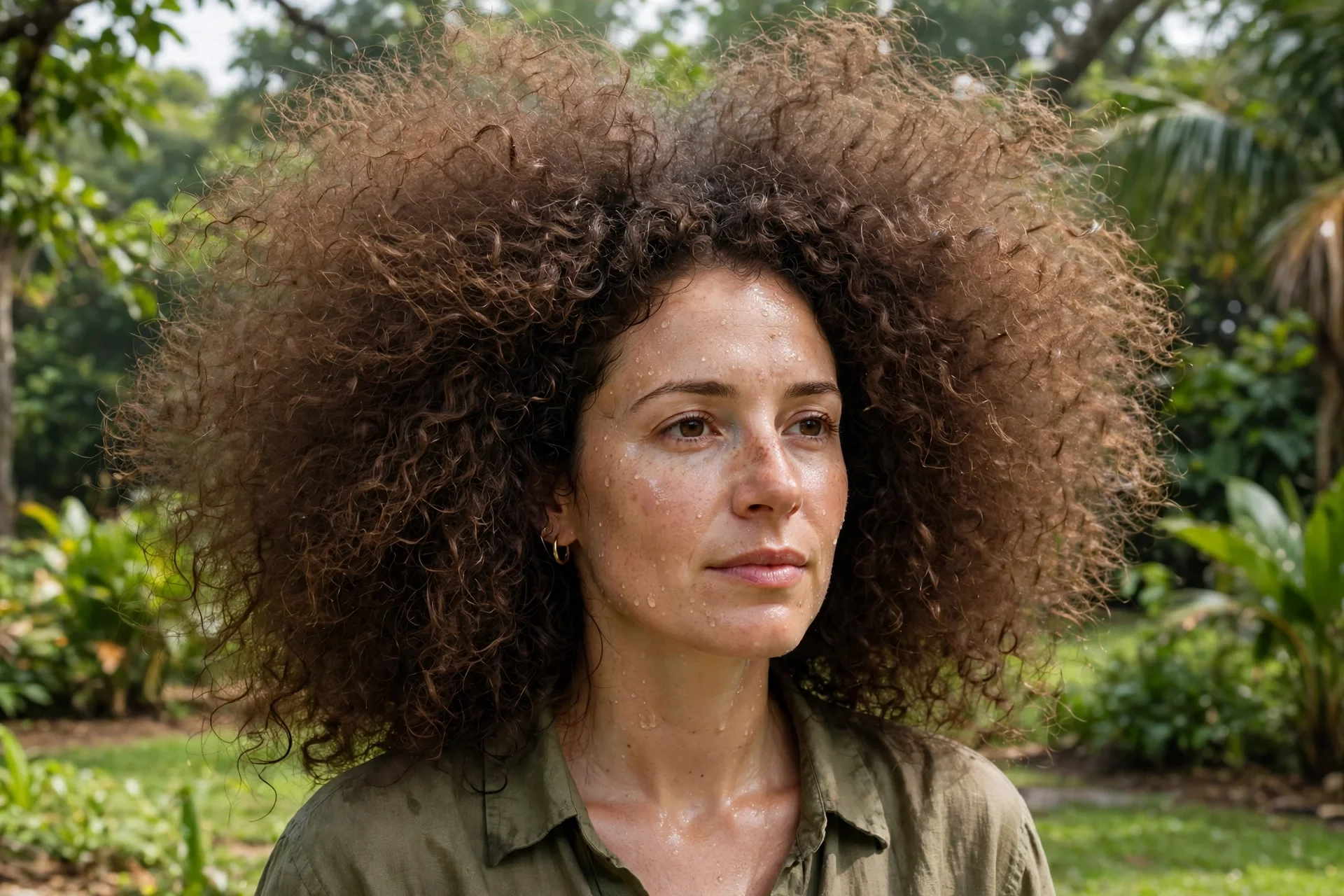
Watch your hair on a humid day. Thick hair swells outward into a bigger halo as it absorbs moisture, growing visibly wider, while fine hair just goes limp and flat. This weather test suits women in humid climates who battle frizz. If humidity doubles your volume, use anti-humidity creams and seal with a cool rinse, because your thick hair is soaking up water from the air and expanding like a sponge.
The Stylist Verdict

When in doubt, just ask your hairstylist. They handle hundreds of heads and can tell in one touch whether your hair is thick, medium, or fine, and whether it is density or strand width doing the work. This is the easiest option for women who have tried every home test and still feel unsure. Bring photos of styles you like to your next appointment, and ask which cuts suit thick hair best, so you leave with both an answer and a plan.
Frequently Asked Questions
What is the easiest way to tell if my hair is thick?
The ponytail circumference test is the simplest. Gather your hair into a ponytail and measure around the base. Around four inches or more means thick hair, under two inches means fine hair, and anything between is medium.
Can hair be thick but fine at the same time?
Yes, and this confuses many women. You can have lots of fine strands, which gives you thick density with a soft texture, or fewer coarse strands. The strand roll test tells you about individual strand width, while the ponytail test tells you about overall density.
Does thick hair need different products than fine hair?
Absolutely. Thick hair needs richer conditioners, more product per wash, and stronger hold from clips and ties. Lightweight volumizing products made for fine hair usually do nothing for thick hair and can even make it feel dry.
Why does my thick hair take so long to dry?
More strands and more layers trap water deep inside your hair. The outer layers can feel dry while the roots are still damp. Blow drying in sections or using a diffuser reaches those hidden layers much faster.
Is shedding more normal with thick hair?
Yes. Everyone sheds between fifty and one hundred strands a day, and when you have more hair overall, that normal shedding looks like a bigger pile. It only becomes a concern if you notice new thinning spots or your ponytail shrinking.
Should I get layers if my hair is thick?
Layers are one of the best cuts for thick hair because they remove bulk and add movement. Long layers keep the length while making hair easier to style, and your stylist can also use thinning shears to take out weight without changing the shape.
Conclusion
Knowing your hair is thick changes everything about how you care for it, from the products you buy to the way you style it each morning. Run two or three of these tests together instead of relying on just one, and you will have a clear answer you can trust. Once you know your thickness for sure, shop for products made for dense hair, be generous with conditioner, and pick styles that work with your natural volume instead of fighting it.