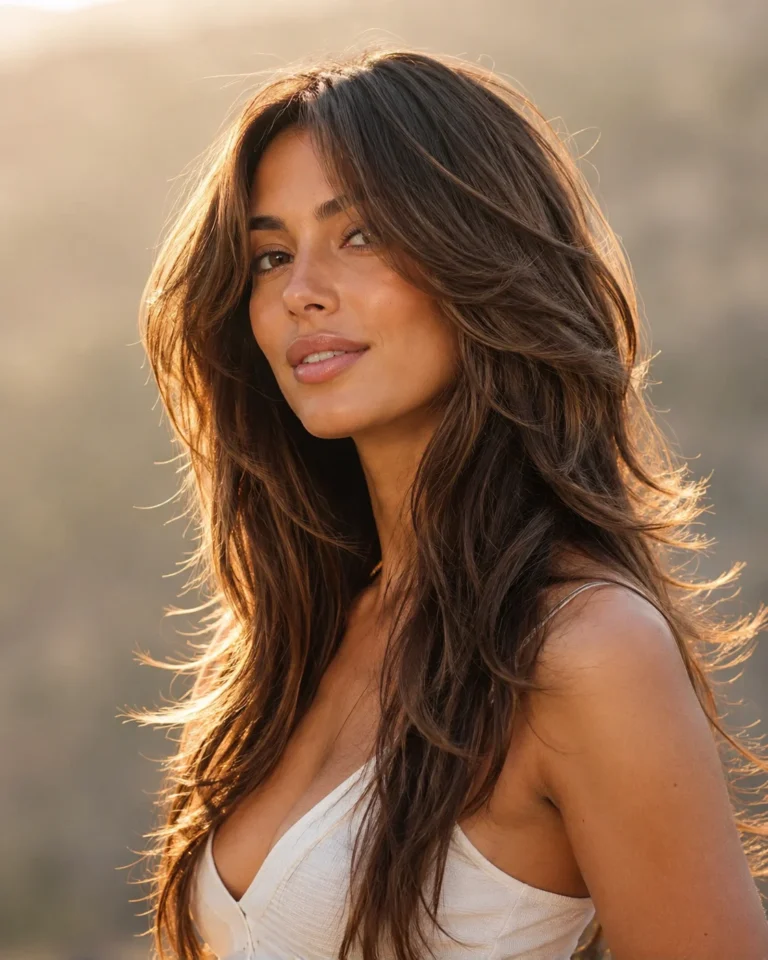
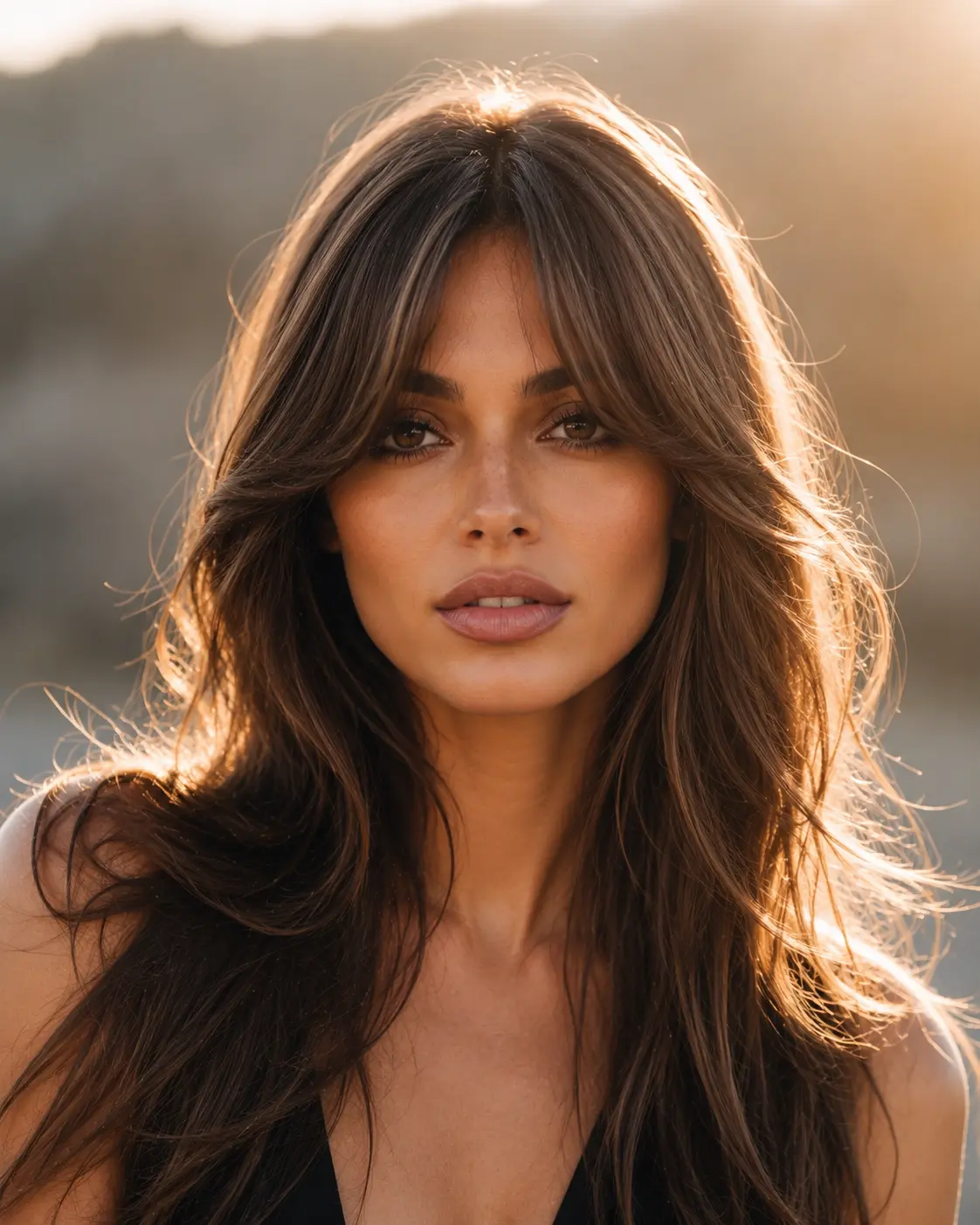
21 Curtain Bangs Ideas for 2026 (Every Face Shape and Hair Texture)
Curtain bangs are still the easiest way to change your whole look without committing to a full haircut. They part down the middle, sweep softly to each side, and somehow flatter almost every face shape without much daily effort. Below are 21 curtain bangs ideas for 2026, organized by face shape and hair texture, along with a way to test the look before you let anyone near your hair with scissors.
What Are Curtain Bangs?
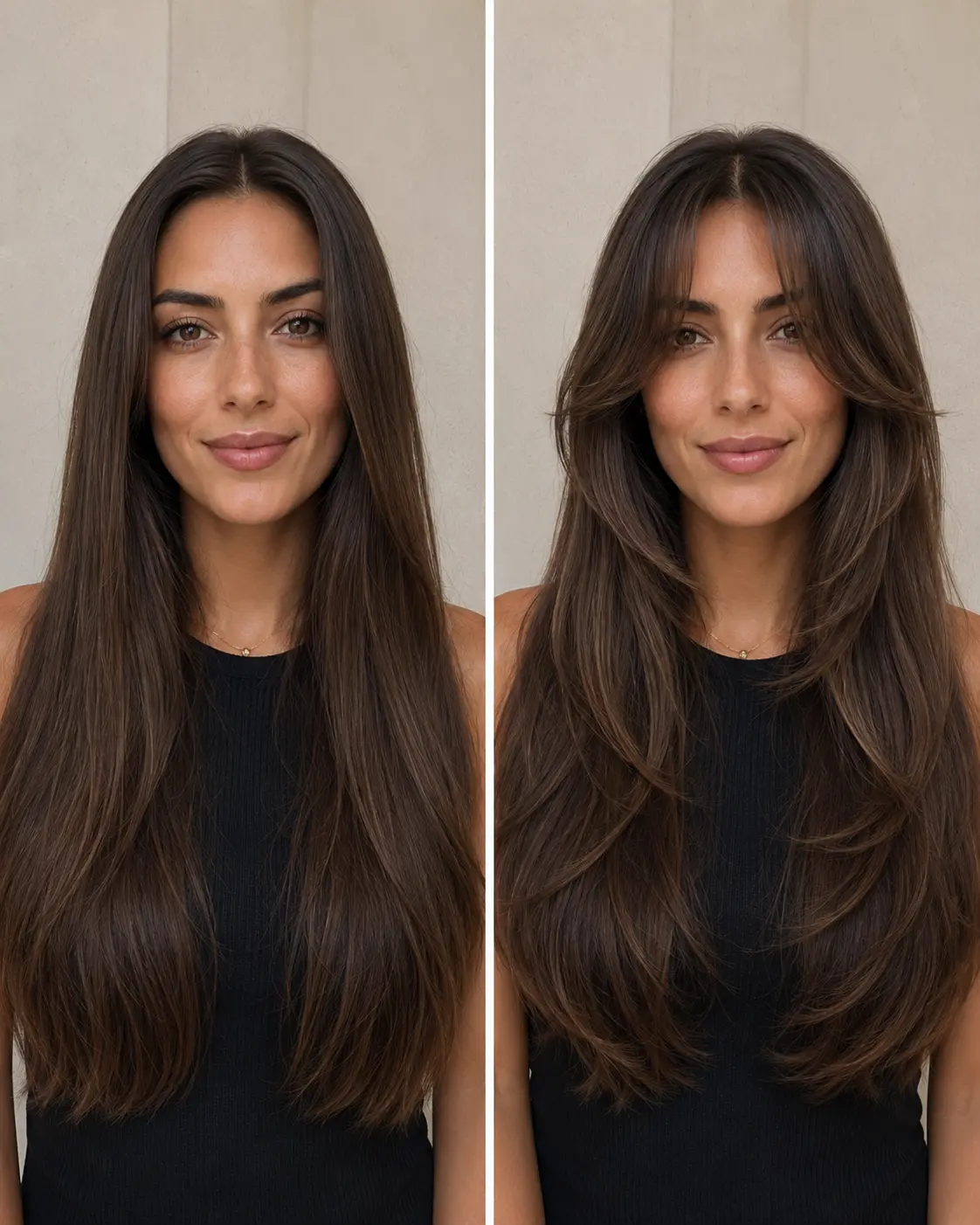
Curtain bangs are a center-parted fringe that tapers longer toward the cheekbones, so it hangs like a pair of curtains framing your face. Unlike blunt bangs, which end in one straight line, curtain bangs are cut in a soft V or U shape, shorter in the middle and longer at the sides. That taper is what makes them blend into the rest of your hair instead of looking like a separate piece.
They started as a 90s staple, faded out for a while, and came back hard over the past few years because they solve a real problem: they refresh your whole face without the commitment of a full fringe. Grown out, they just become face-framing layers. There is no awkward “shelf” phase the way there is with blunt bangs.
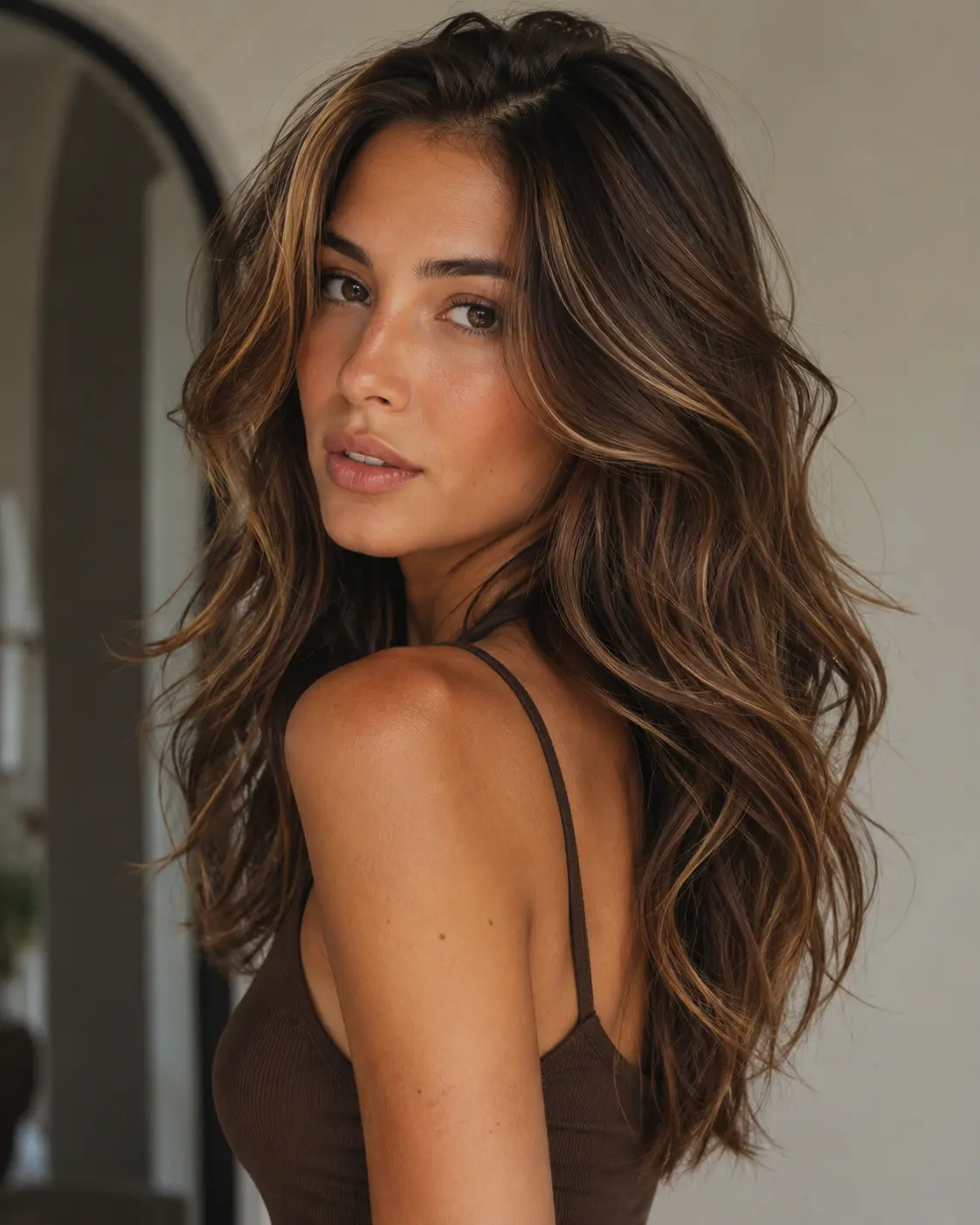
Quick Face Shape and Texture Guide
- Round face: longer curtain bangs, starting at the cheekbone, add length instead of width.
- Square face: softer, wispier curtain bangs curve the jawline visually.
- Long or oval face: almost any curtain bang works, since the face shape is already balanced.
- Heart-shaped face: light, wispy bangs that sweep outward reduce forehead width without hiding your cheekbones.
- Fine hair: keep the bangs thinner and slightly longer, or they will look sparse fast.
- Thick hair: you can go heavier and bolder, since your hair has the density to support it.
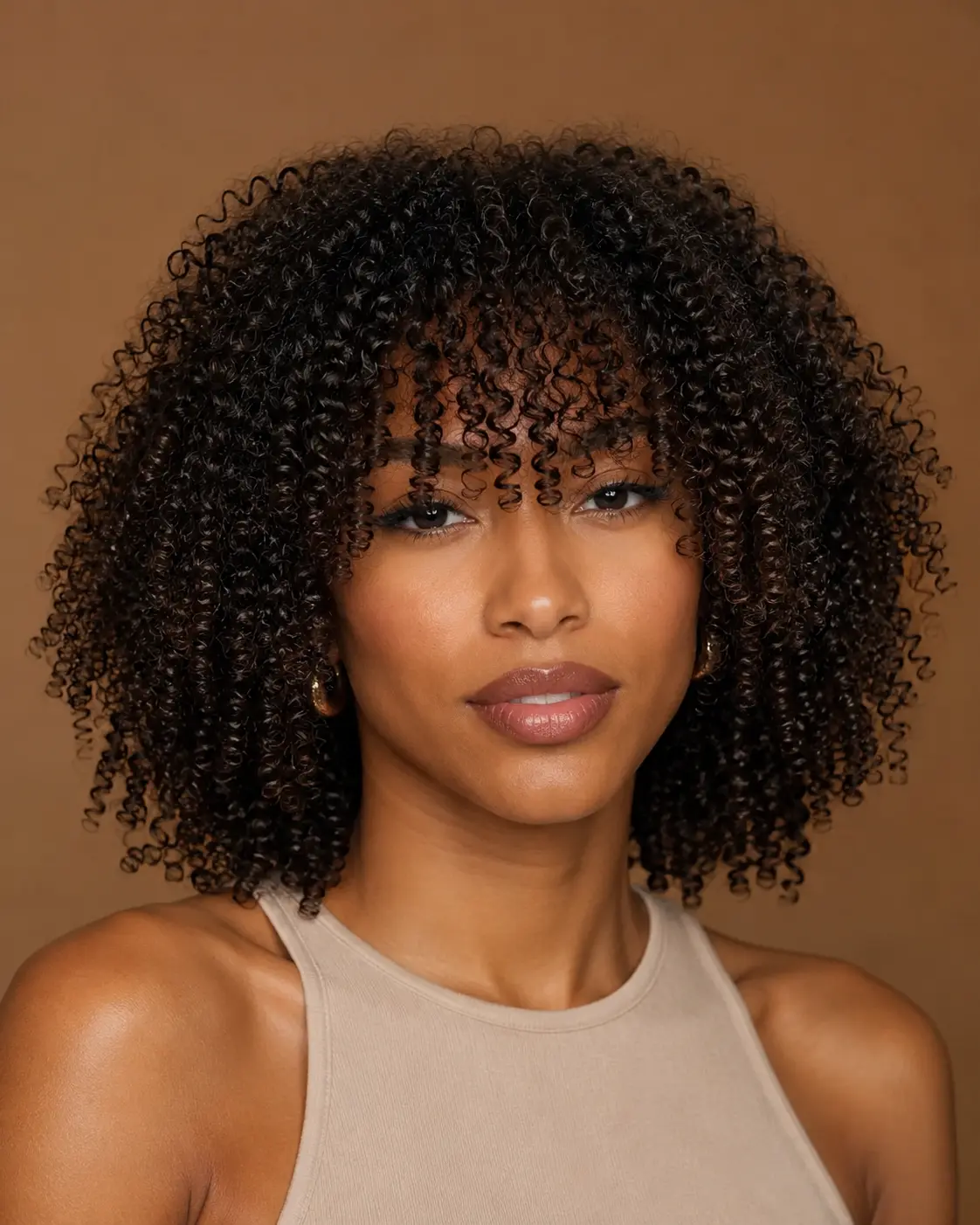
- Curly or coily hair: always cut dry, never wet, or the bangs will shrink up shorter than planned.
Curtain Bangs Ideas for 2026
Classic Curtain Bangs for Long Hair
Soft Wispy Curtain Bangs The most forgiving version on this list. Thin, feathery pieces that barely graze the eyebrows and blend straight into the rest of your hair. If you have never had bangs before, this is the lowest-risk place to start.
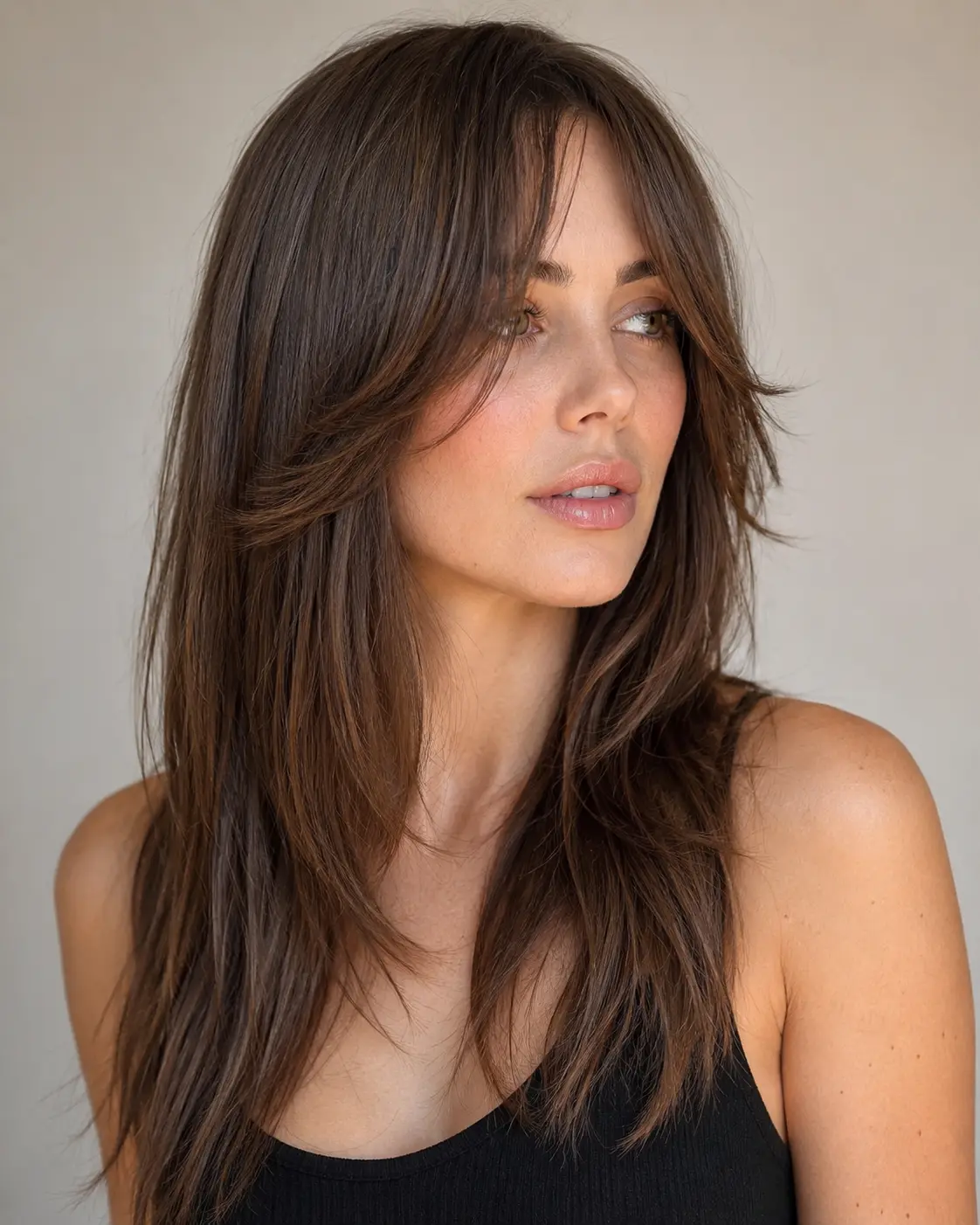
Long Cheekbone-Length Curtain Bangs These fall to cheekbone level and act more like an extra layer than a true fringe. Easiest version to grow out and one of the lowest-maintenance options here.
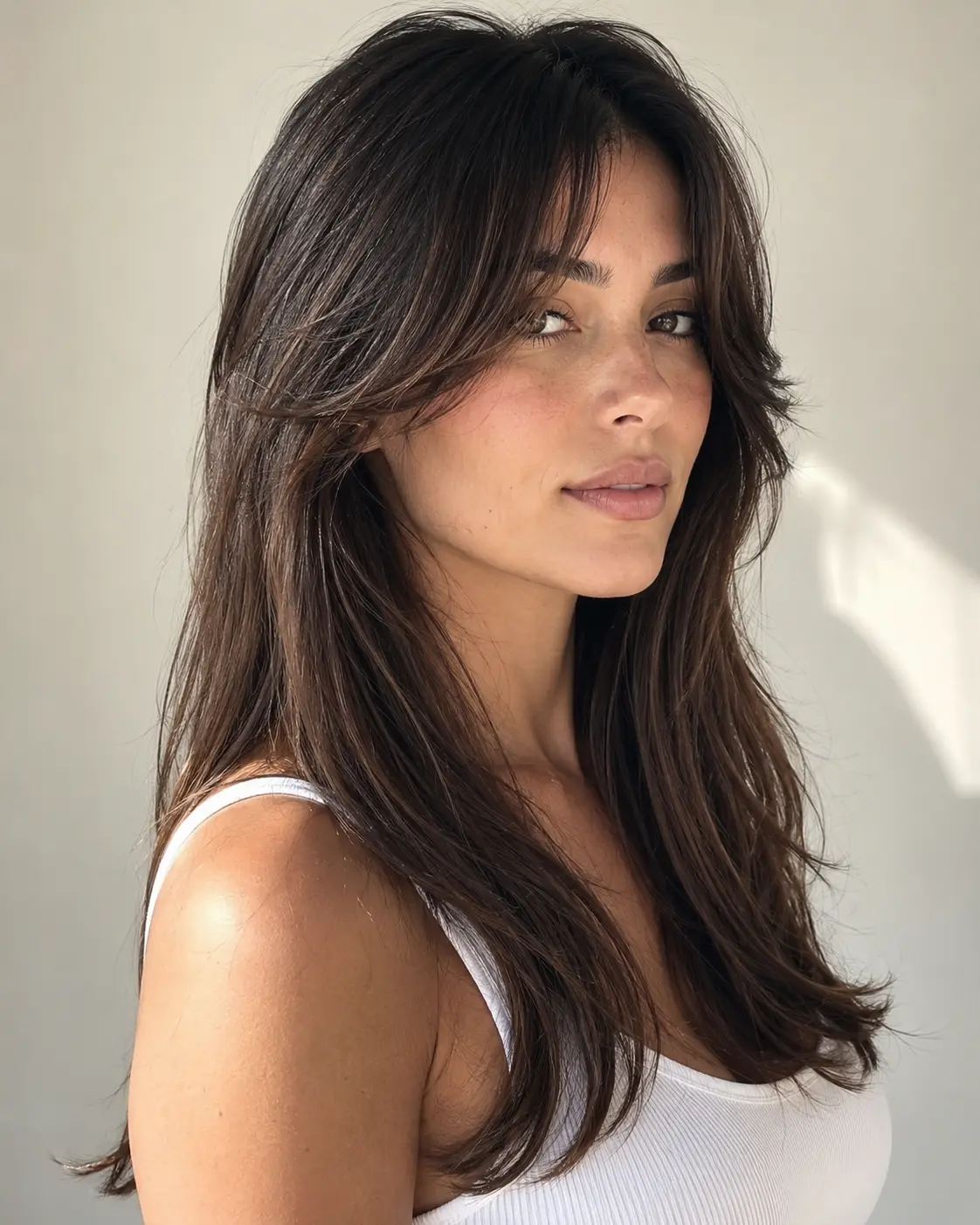
Feathered 70s Curtain Bangs Fuller than the wispy version, with feathered ends that taper into long layers throughout the rest of the hair. This is the closest style to the original 70s curtain bang look.
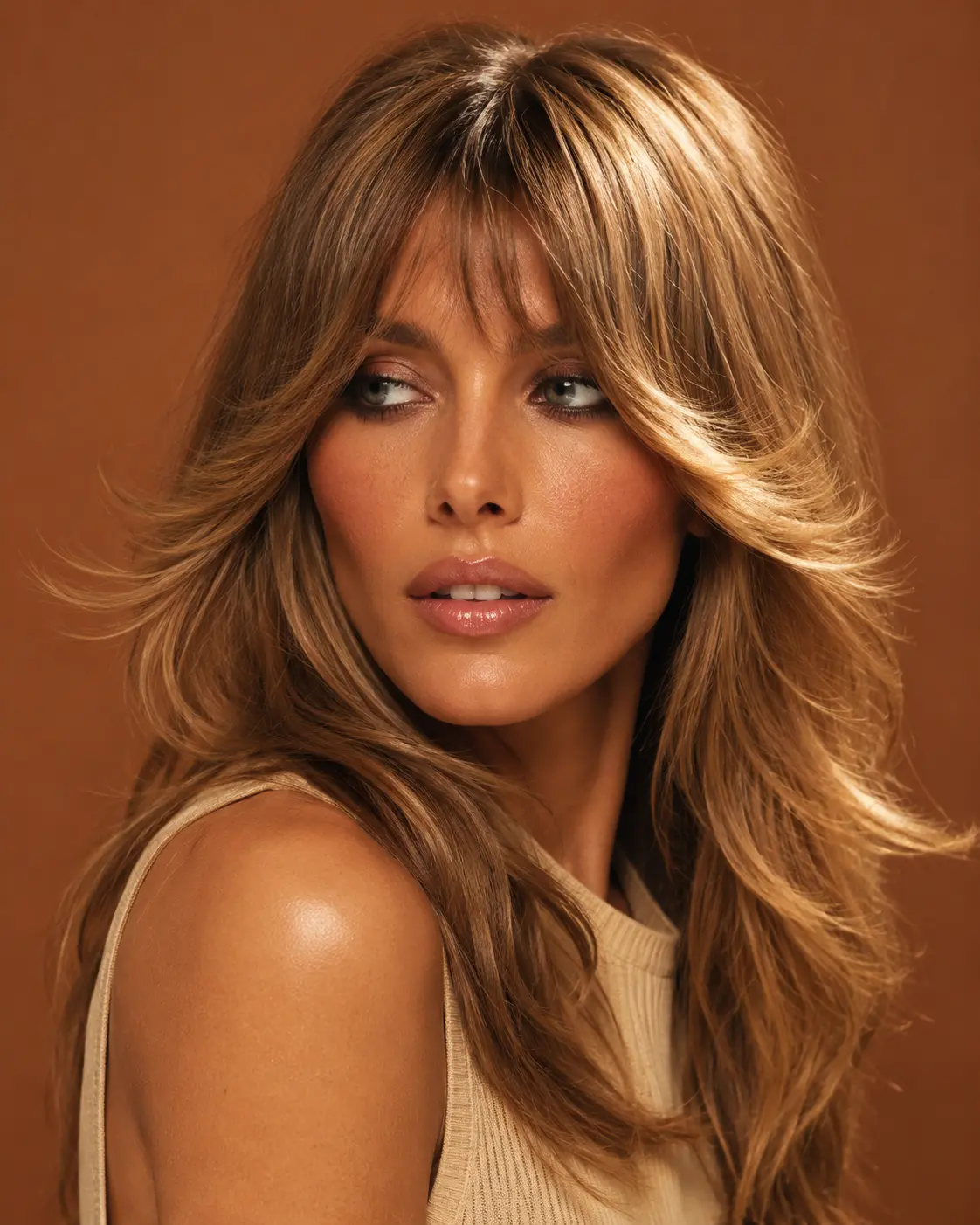
Curtain Bangs with a Blowout Big, round-brush volume through the bangs and the crown together. Photographs especially well since the volume reads clearly even in a small thumbnail image.
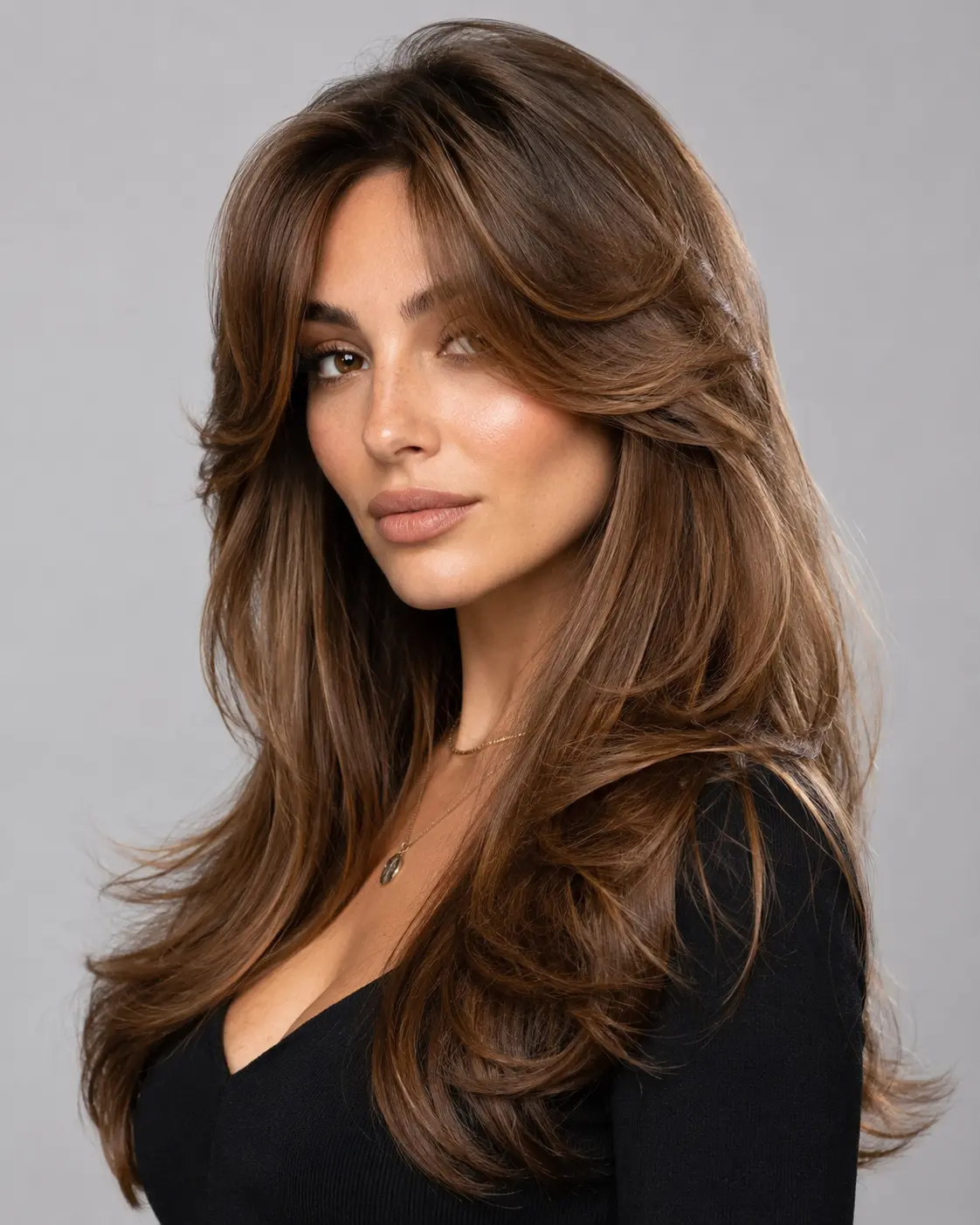
Long Curtain Bangs Below the Chin For anyone not ready to commit to shorter bangs, this version sits below the chin and acts more like a soft frame than a true fringe. Very easy to push back or clip away entirely on a low-effort day.
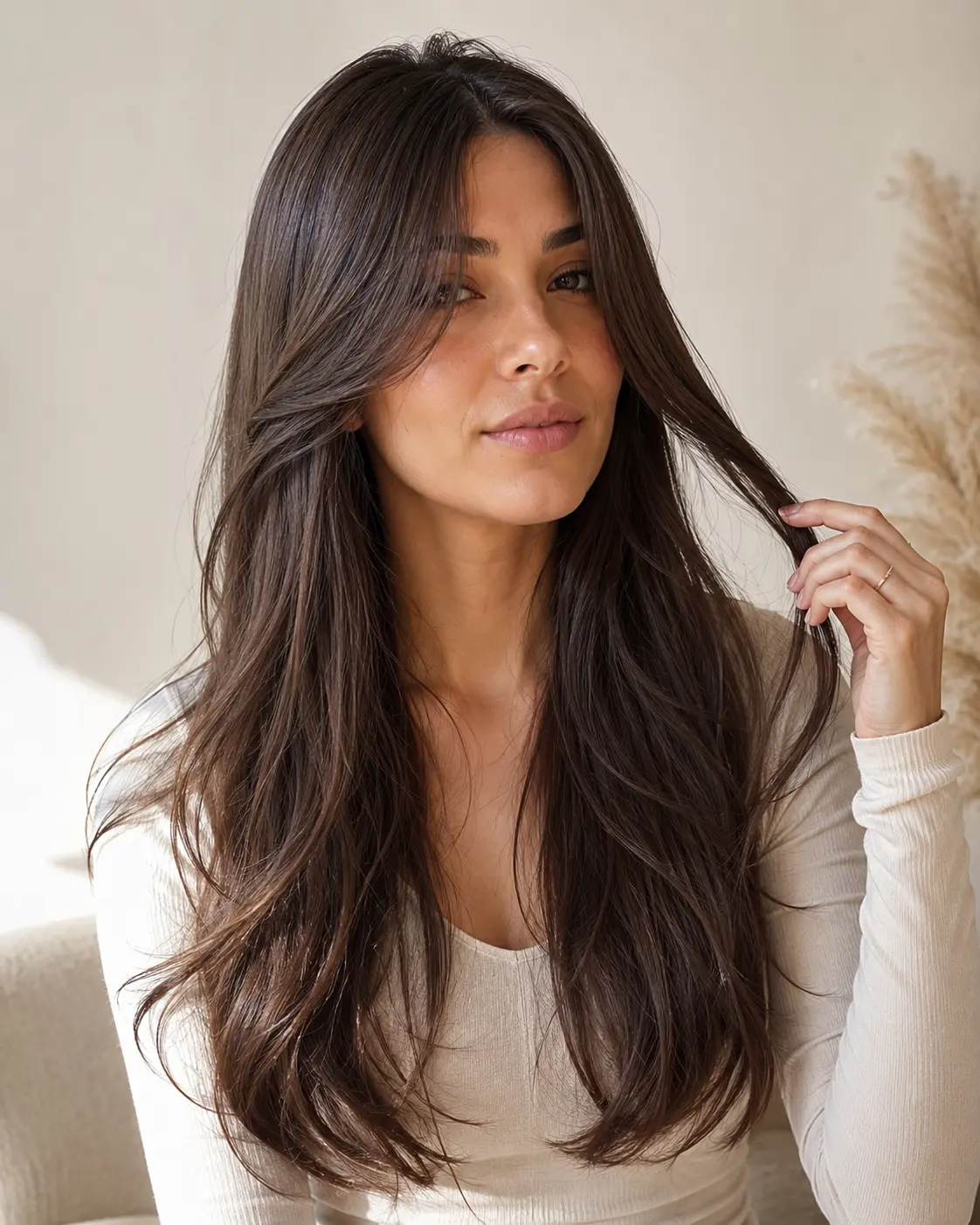
Curtain Bangs with Beach Waves Loose waves through the bangs themselves, not just the rest of the hair, so the fringe moves and flips instead of hanging flat.
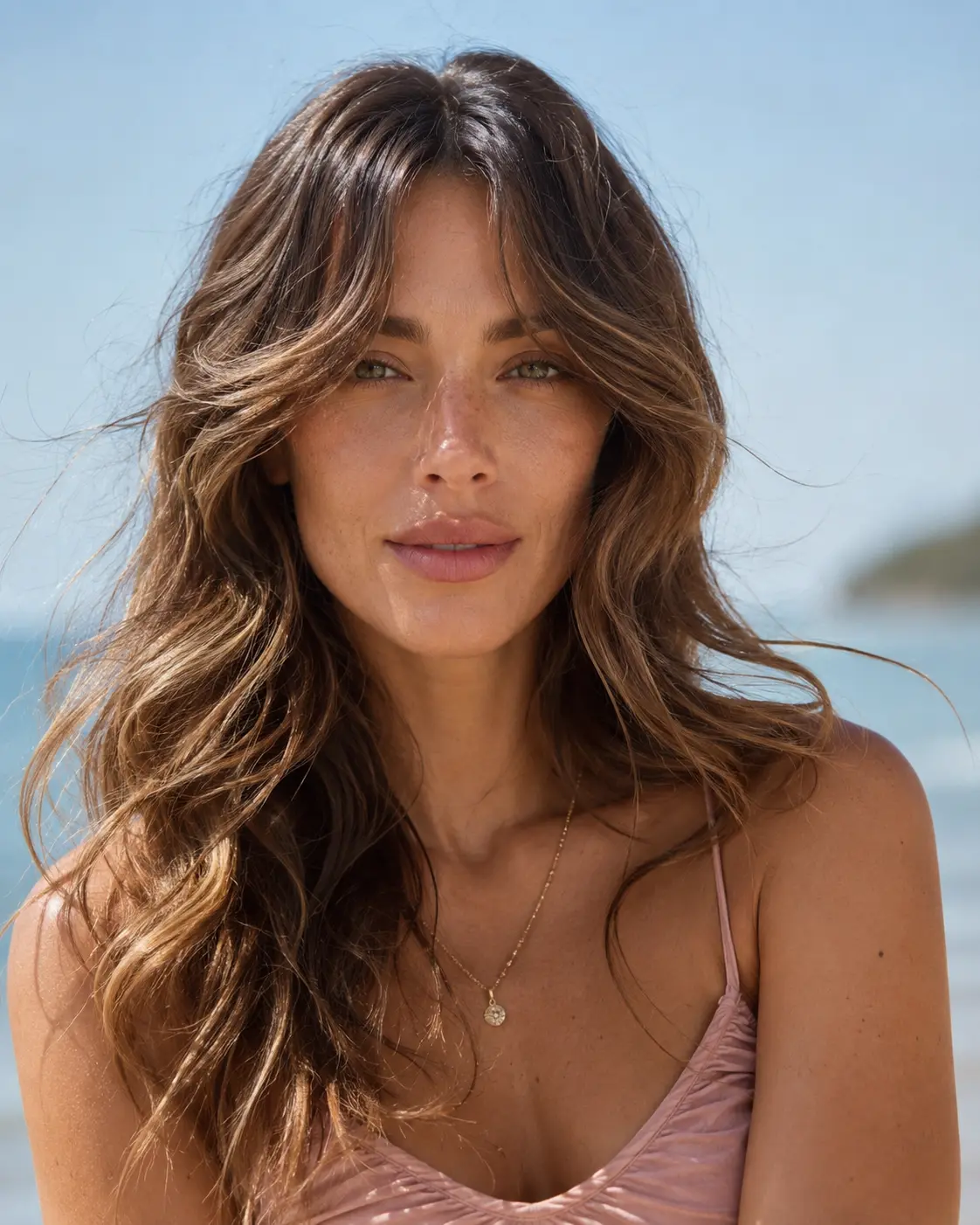
Curtain Bangs by Face Shape
Round Face Curtain Bangs Cut longer, usually starting past the cheekbone, so the vertical line does the work of visually elongating the face rather than adding width at the widest point. Two sentences only: length is the priority here, not thickness. Ask your stylist to keep the shortest point well below the eyebrow.

Square Face Curtain Bangs Soft and wispy rather than thick, curving gently at the ends to round off strong jaw angles instead of echoing them.
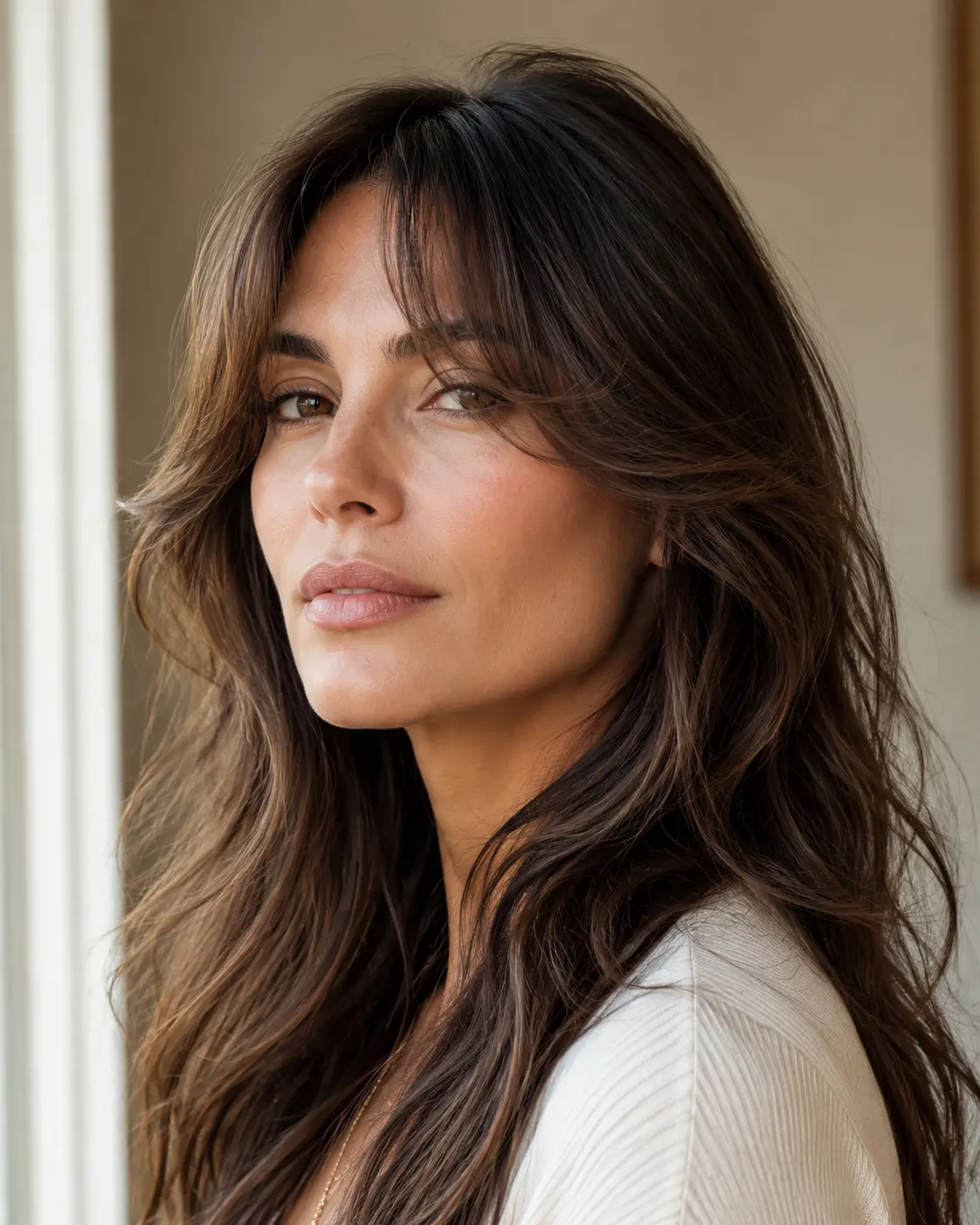
Heart-Shaped Face Curtain Bangs Light and outward-sweeping, these reduce the visual width of the forehead, which is usually the widest point on a heart-shaped face, while leaving the cheekbones and chin visible.
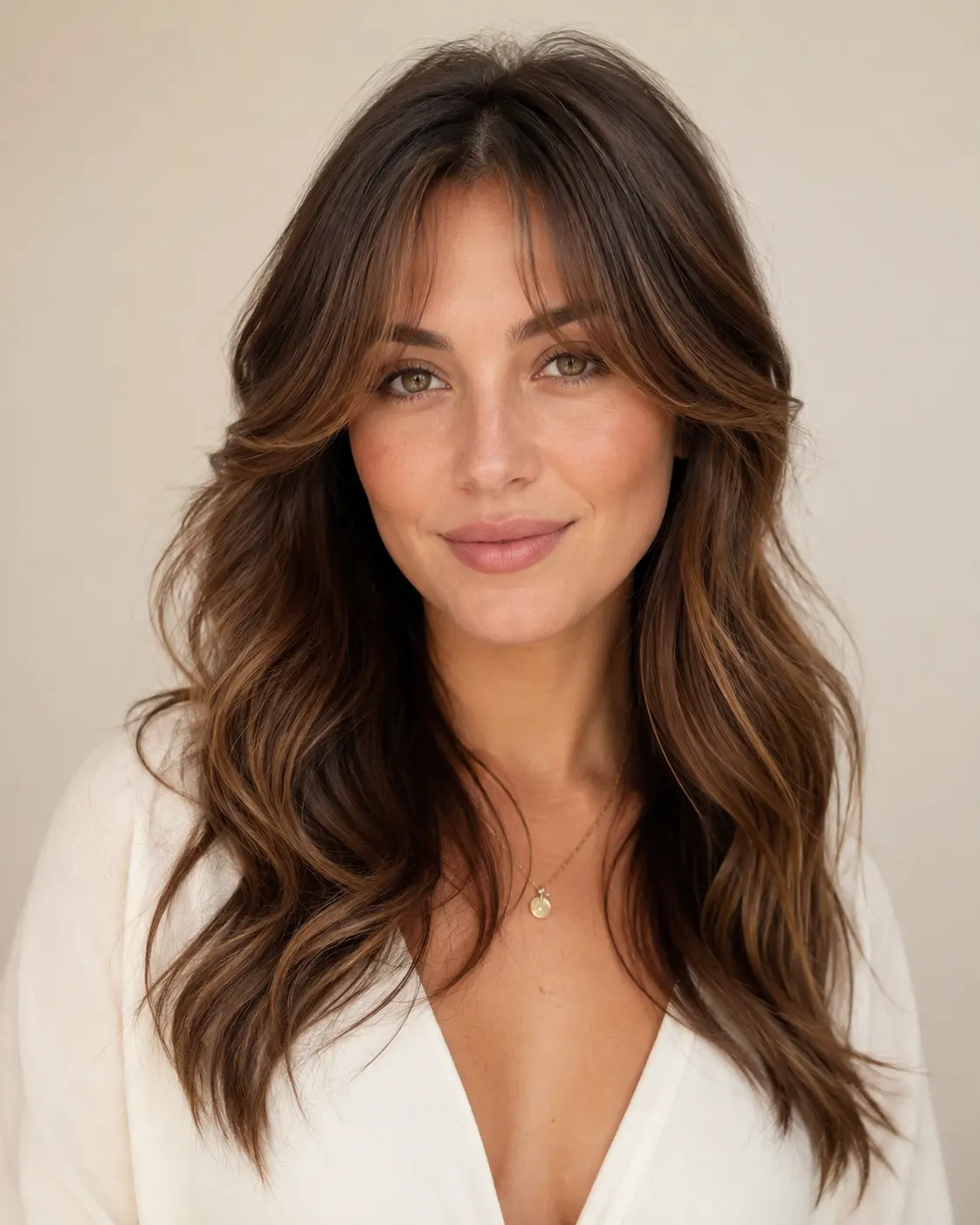
Long Face Curtain Bangs Fuller and positioned lower on the forehead than other versions, since the goal here is to visually shorten the face rather than add more vertical length.
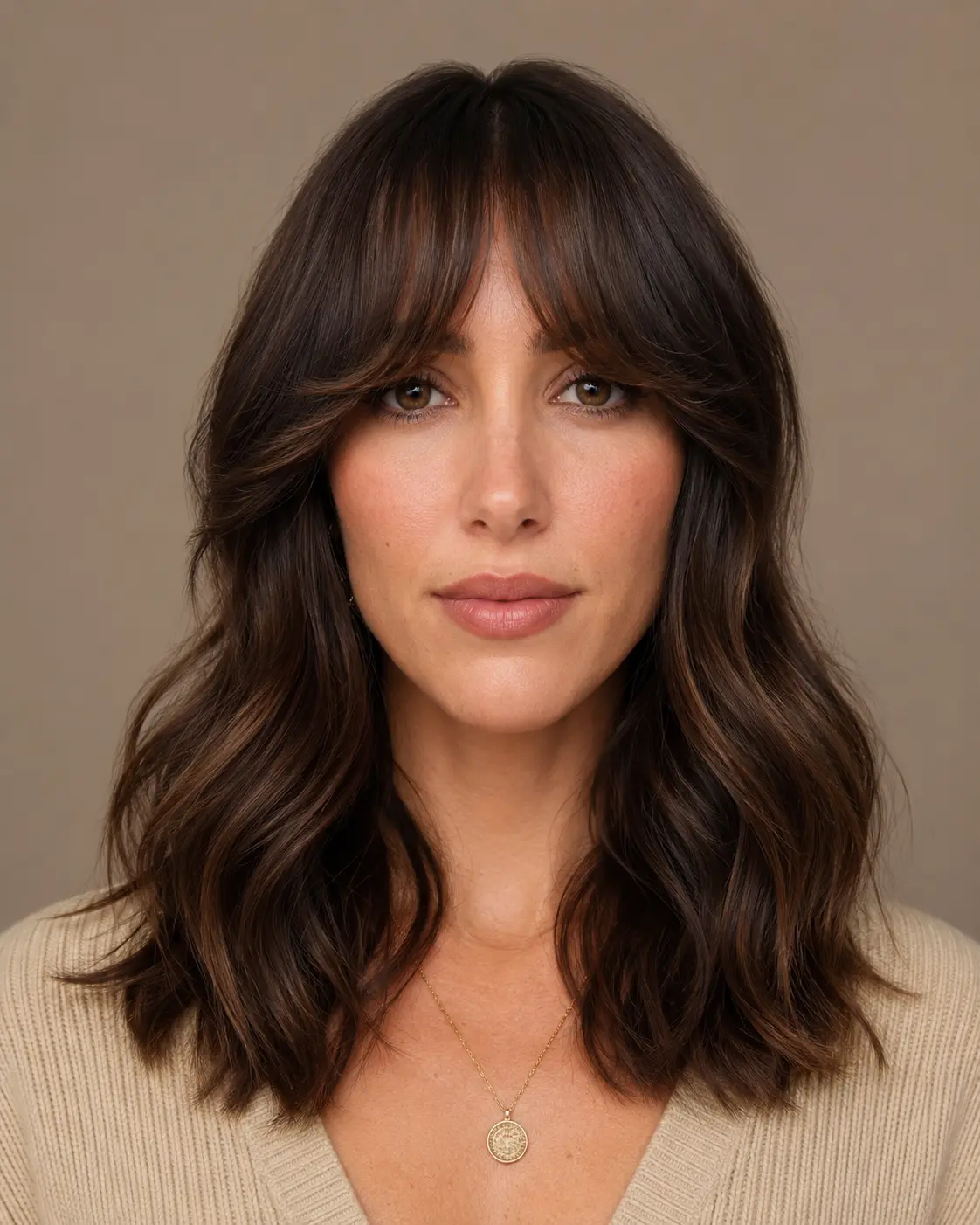
Oval Face Curtain Bangs Since oval faces are already balanced, this is the one shape where almost any version from this list works without adjustment. Pictured here: a mid-weight, cheekbone-length version.
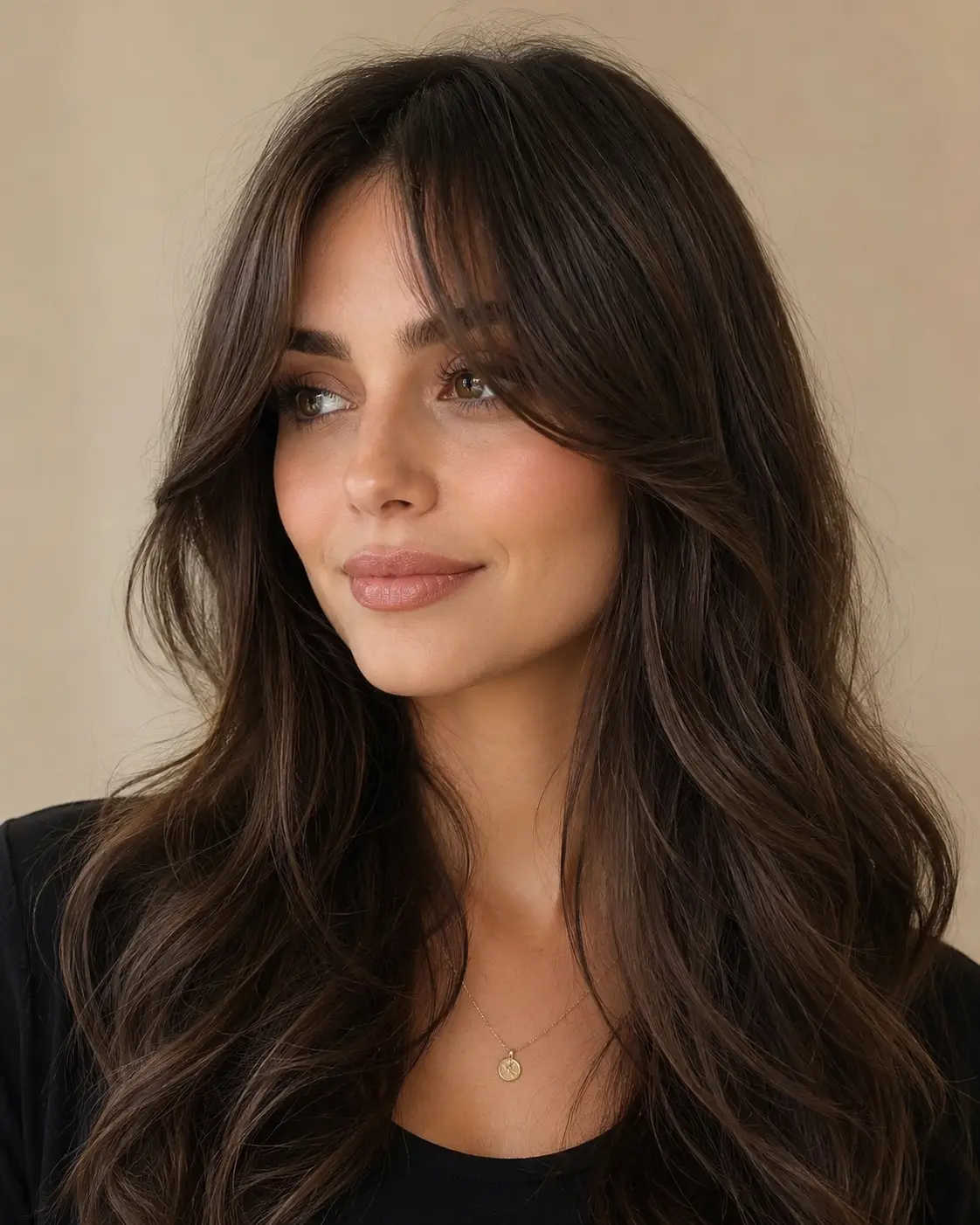
Curtain Bangs by Hair Texture
Curtain Bangs on Straight Hair Needs the most active daily styling of any texture, since there is no natural wave to hold the outward curl. A round brush or a quick pass with a small curling iron is what keeps this version from falling flat.
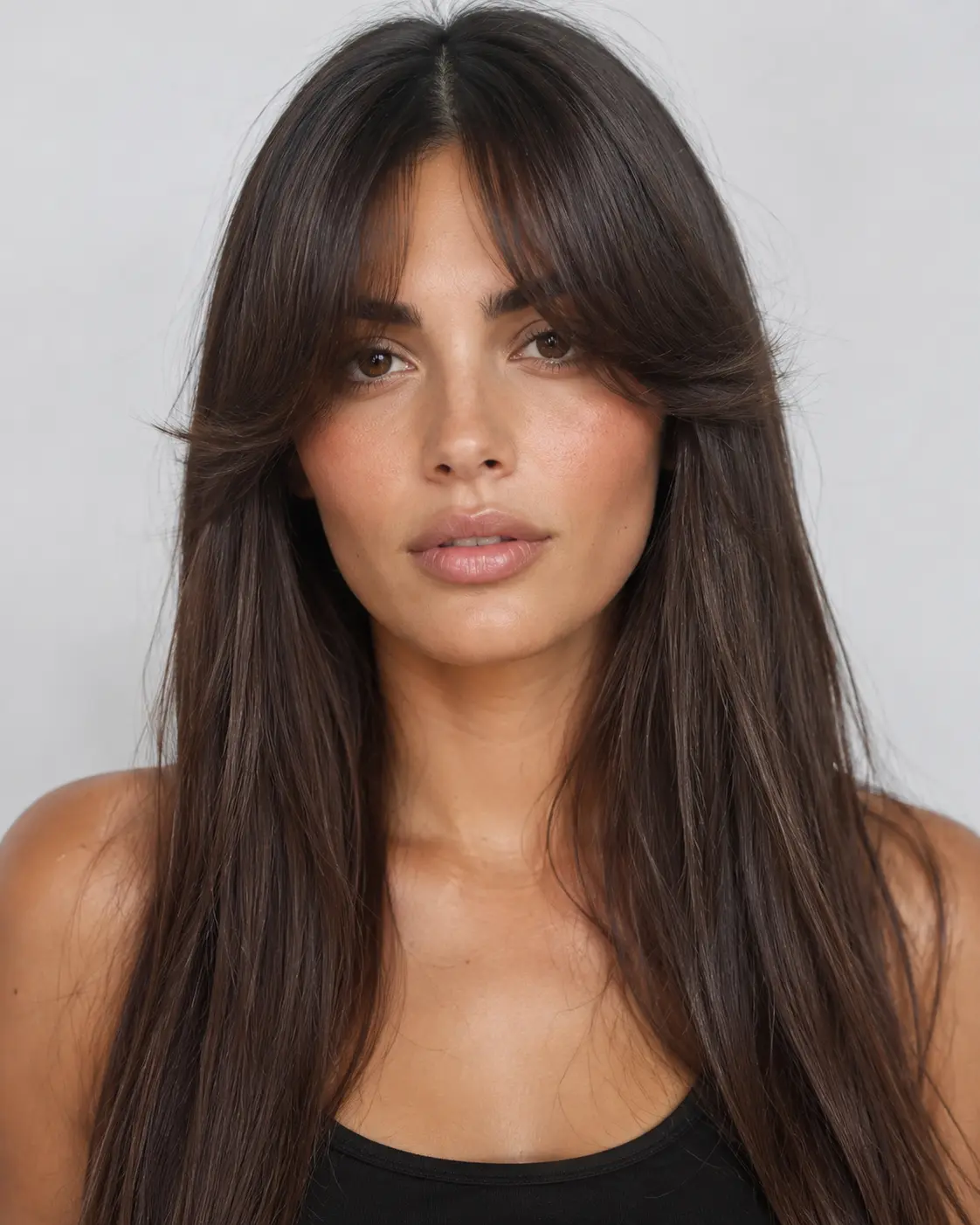
Curtain Bangs on Wavy Hair The natural bend in wavy hair does most of the styling work already, so these bangs need very little daily maintenance beyond a quick finger-through.
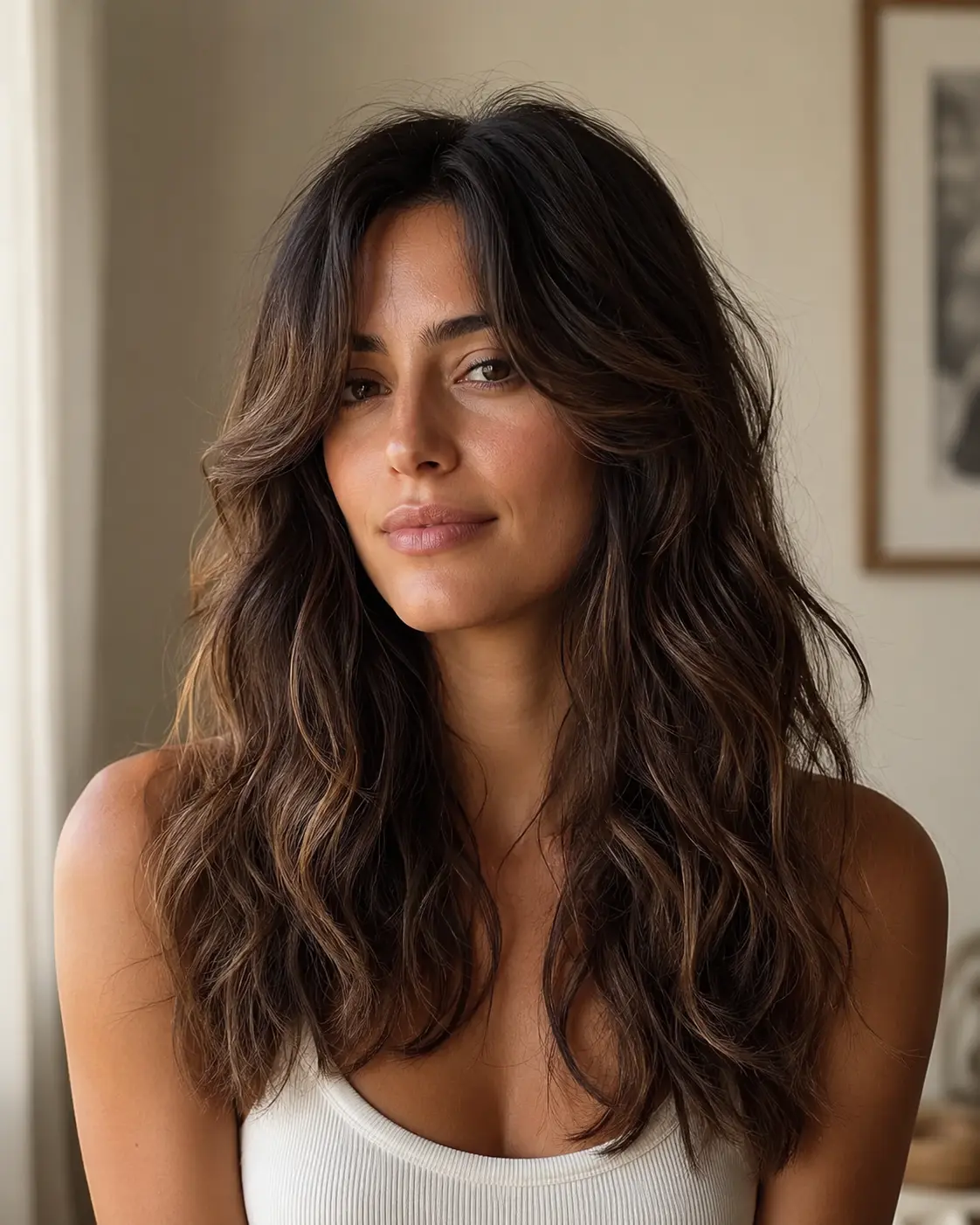
Curtain Bangs on Thick Hair Cut with some internal thinning so the fringe doesn’t sit too heavy on the forehead. Thick hair can support a bolder, fuller curtain bang than fine hair can.
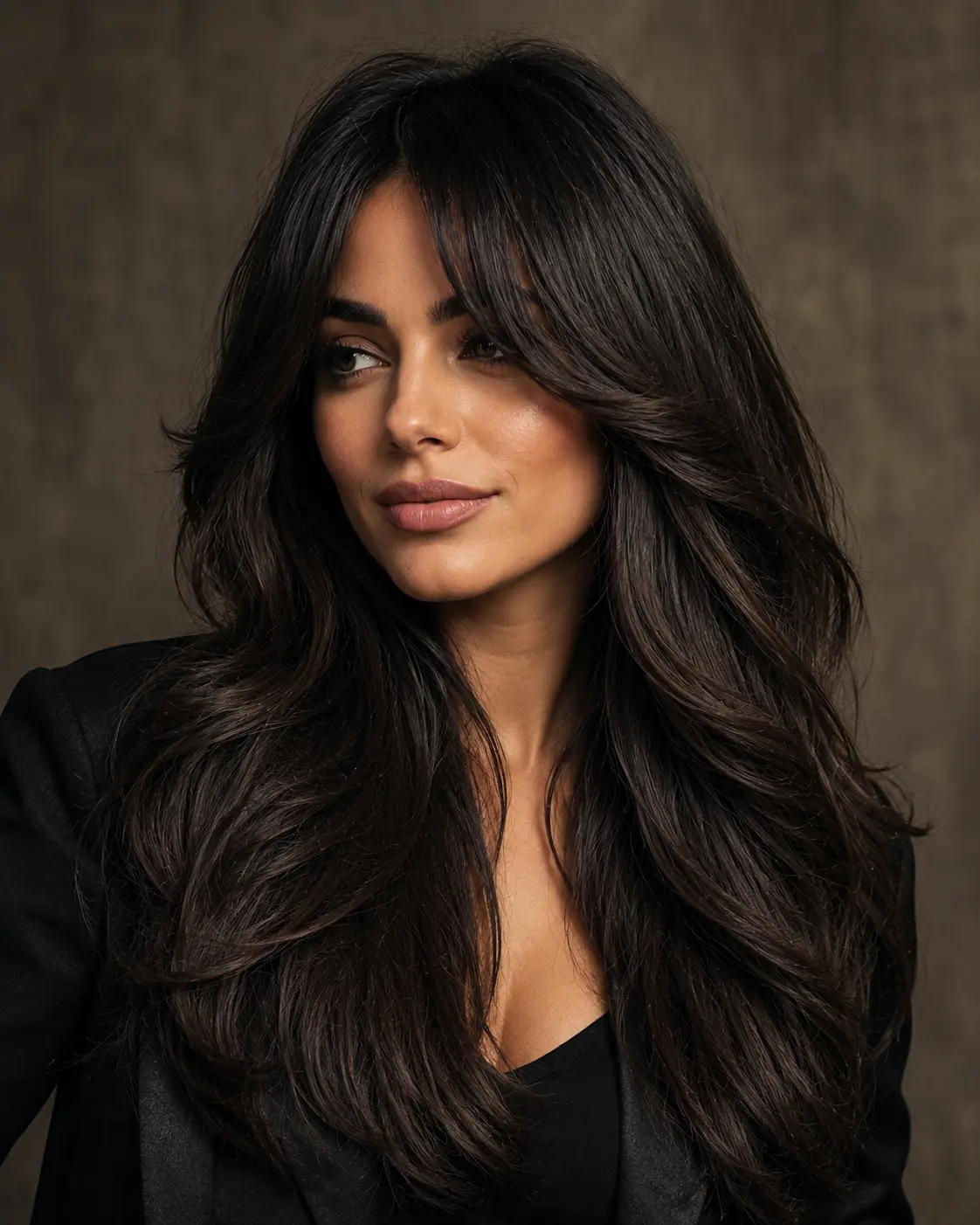
Curtain Bangs on Fine Hair Cut slightly longer and thinner than standard, since heavy layering on fine hair reads as sparse rather than soft. A volumizing primer at the root before blow-drying helps them hold shape through the day.

Curtain Bangs on Curly or Coily Hair Always cut dry, curl by curl, never wet. Wet-cut bangs on curly or coily hair almost always end up shorter than planned once the shrinkage sets in, sometimes dramatically so.
Bold and Trend-Forward Curtain Bangs
Bottleneck Bangs A hybrid between curtain bangs and a full fringe: narrow and short in the very center, flaring out wider toward the sides. One of the most searched bang styles heading into 2026.
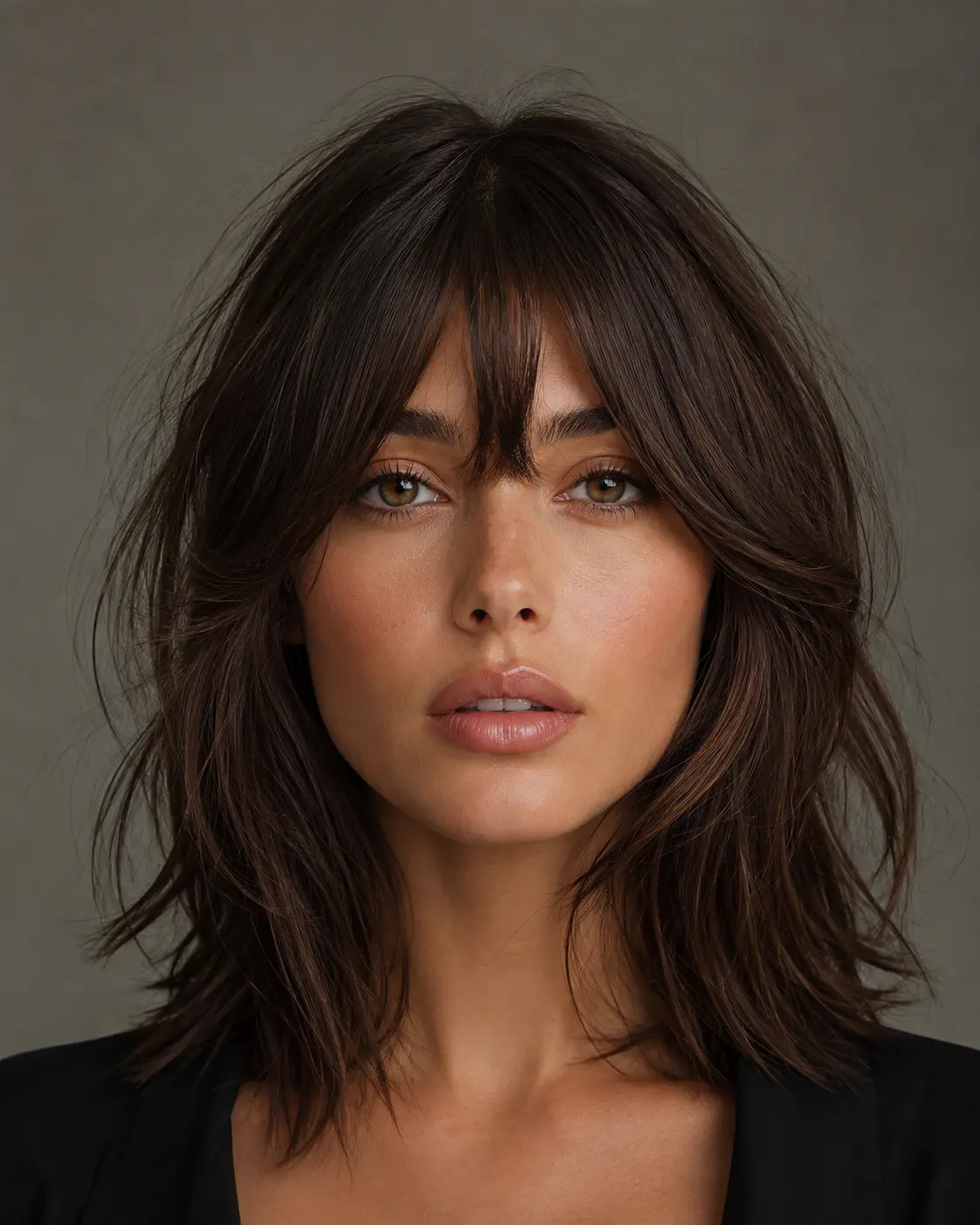
Thick, Bold Curtain Bangs Heavier and more structured than the wispy versions, these create real contrast against the rest of the hair instead of blending in softly. Best suited to thicker hair that can carry the extra density.
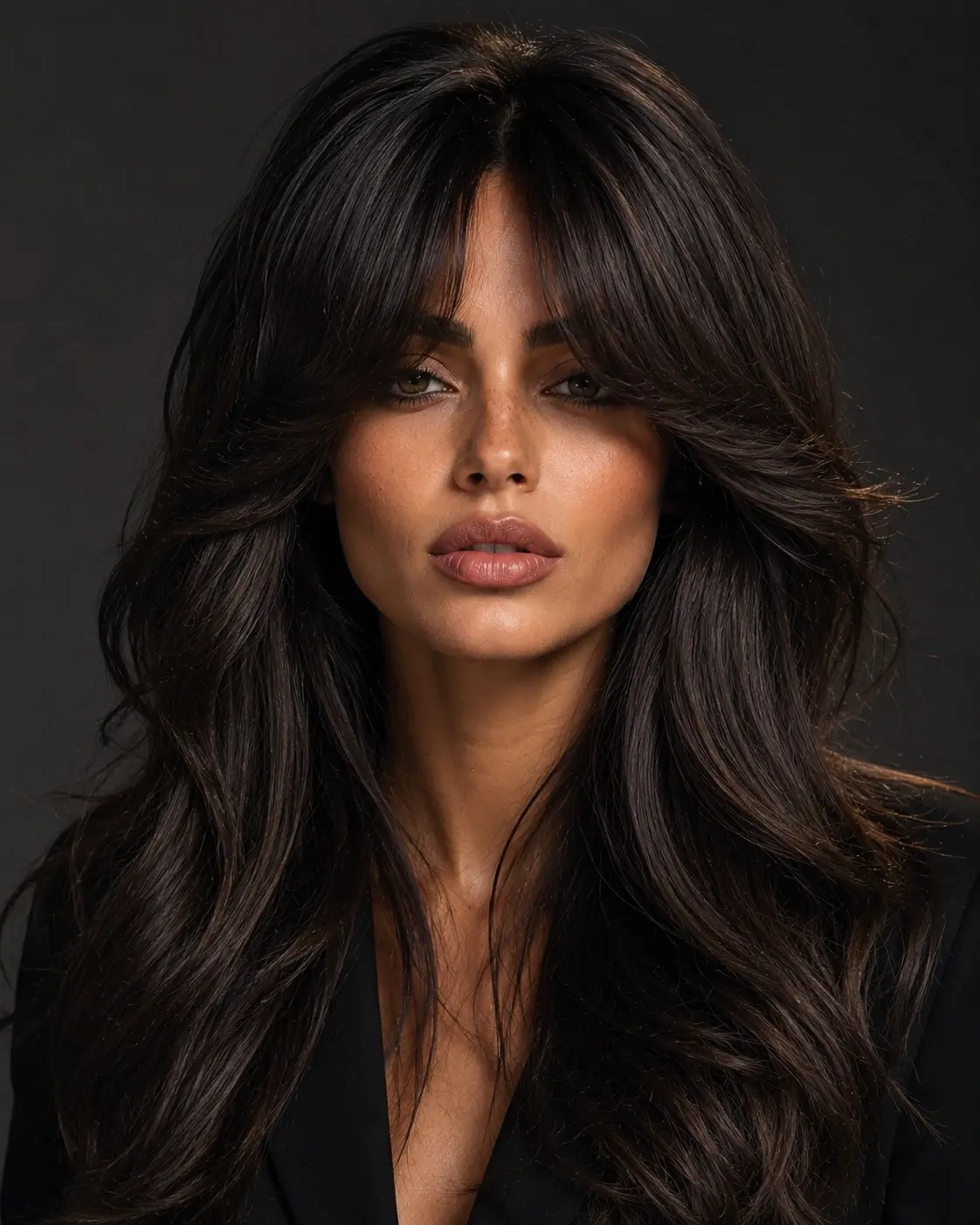
Side-Swept Curtain Bangs Instead of a strict center part, these sweep more heavily to one side, adding a touch of asymmetry without losing the curtain shape entirely.
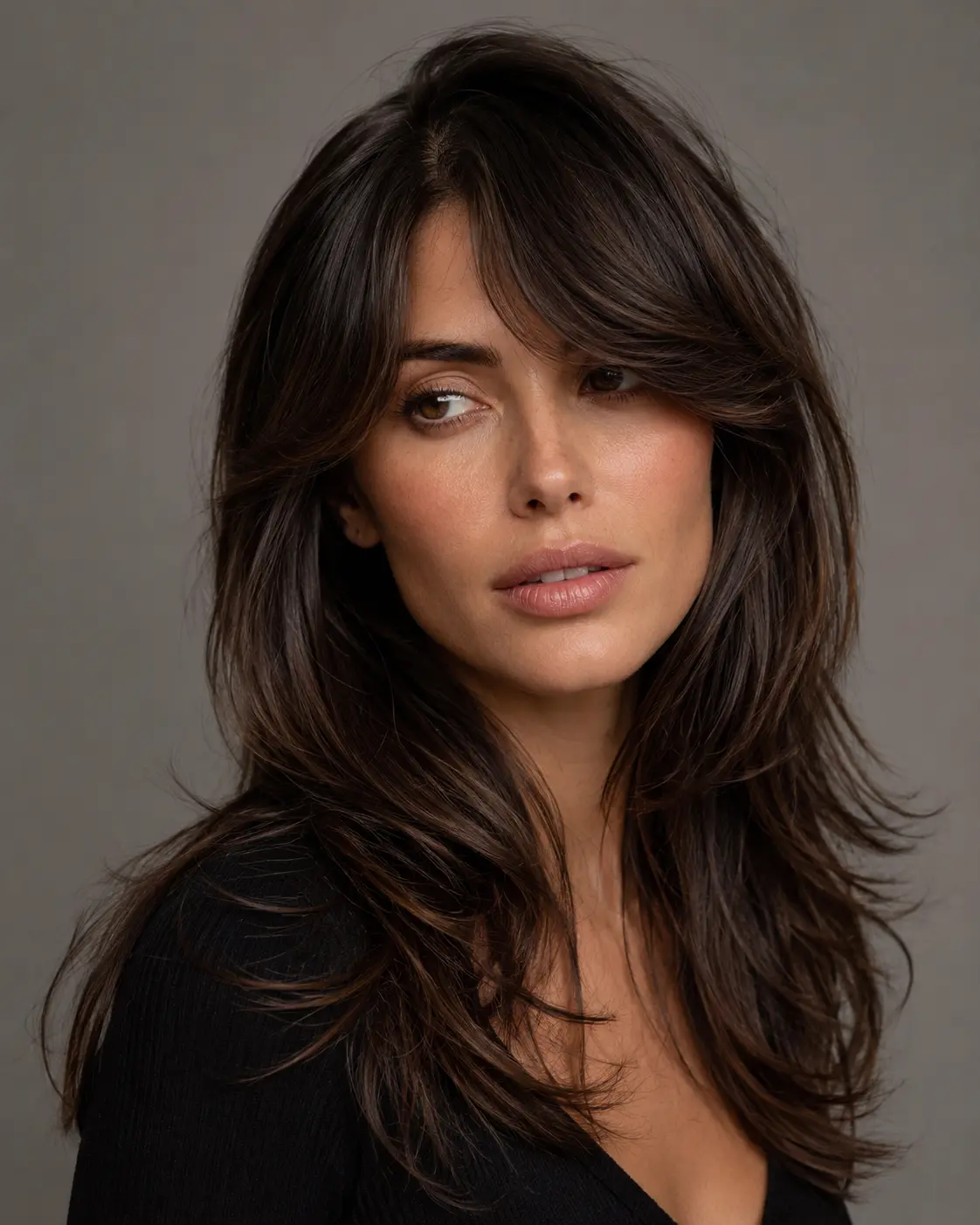
Curtain Bangs with a Money Piece A bright face-framing highlight placed right at the edge of the bangs, drawing extra attention to the taper and the eyes.
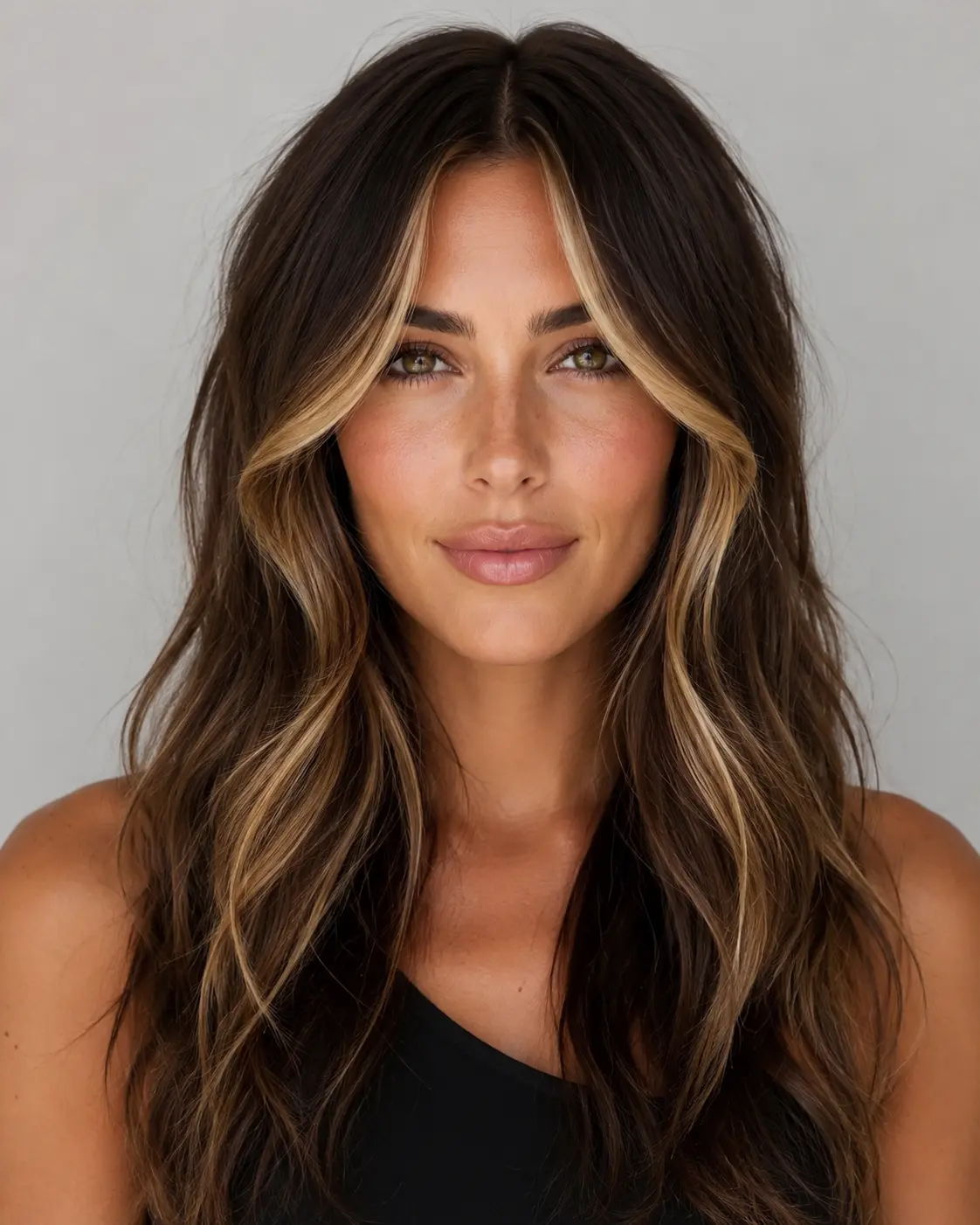
Micro Curtain Bangs The shortest, boldest version on this list, sitting well above the brow but still keeping the soft outward taper at the sides instead of a blunt line. Requires the most frequent trims of anything on this list.

How to Style Curtain Bangs Day to Day
- Apply a small amount of heat protectant to damp bangs before any blow-drying.
- Use a small round brush and rotate the bangs outward and down, away from your face, on medium heat.
- Finish with a cool shot from the dryer to lock the shape in place.
- On day two or three, a light texturizing spray at the root revives lift without a full reset.
- If your bangs fall flat by midday, a travel-size curling iron on the shortest section takes under a minute to fix.
Try Before You Commit: Fake Curtain Bangs
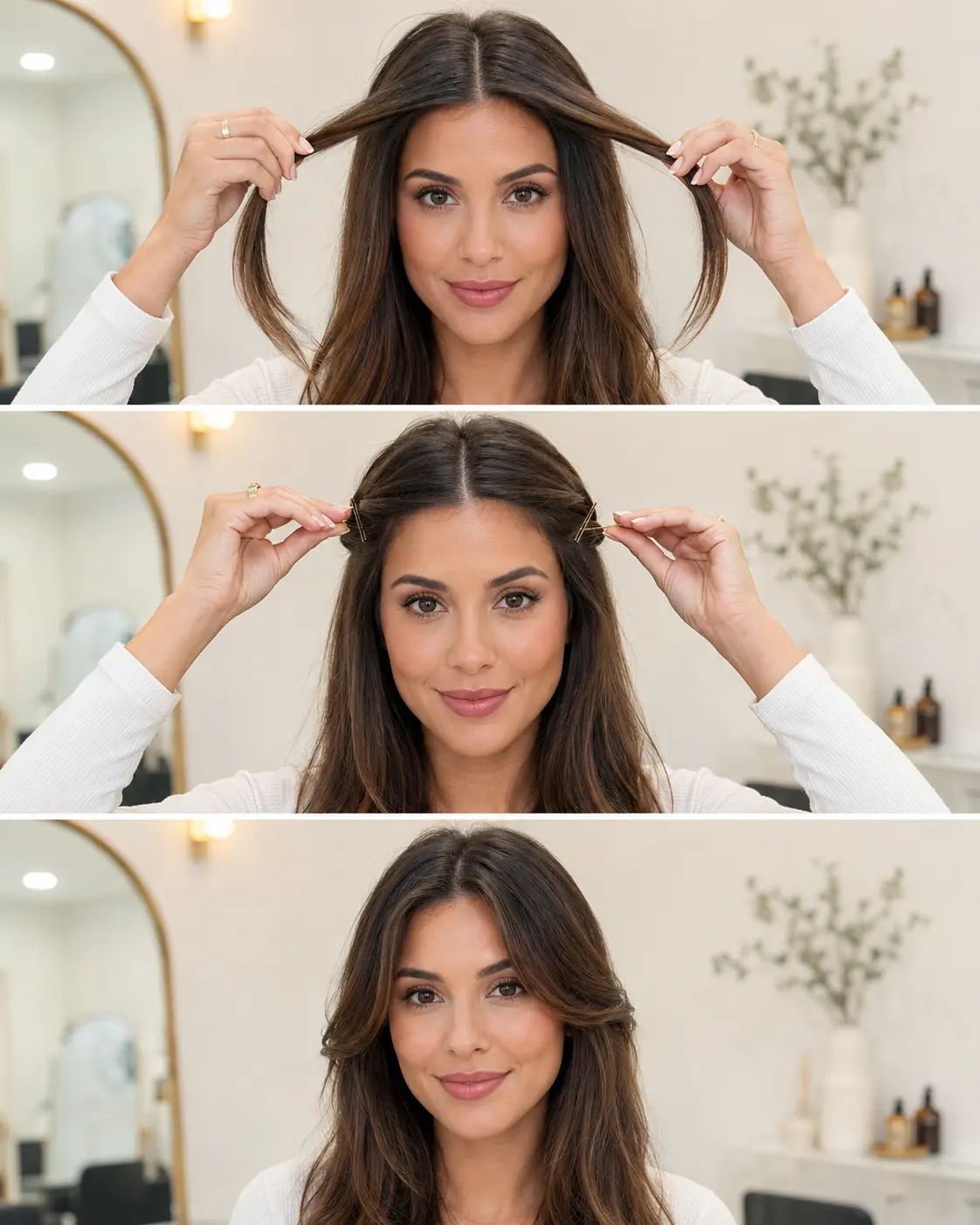
If you already have long layers, you can preview the look without cutting anything. Take the front sections of hair on either side of your part, twist them slightly forward, and pin them loosely at the temple so they fall across your forehead. Blow-dry or curl just those sections outward the same way you would real bangs. It will not behave exactly like a true cut fringe, but it gives you a realistic few hours of what the length and shape will look like on your face before you book anything permanent.
Growing Out Curtain Bangs
Curtain bangs are one of the easier bang styles to grow out, but the middle stretch, usually around the four-to-six-week mark, still gets a little awkward. A few things help:
- Ask your stylist to blend the bangs into face-framing layers early, before the growing-out phase starts, instead of waiting until they are already too long to sit as bangs.
- Clip the front sections back or tuck them behind your ears on days they will not cooperate.
- A light-hold pomade on the ends keeps fly a ways controlled while the length catches up to the rest of your hair.
Maintenance and Cost
Curtain bangs typically need a trim every three to five weeks to keep the shape from growing past your face and losing definition. Because it is usually a quick trim rather than a full haircut, many salons offer bang trims between full appointments at a lower cost, and some throw them in free between full-price cuts. Ask when you book your first curtain bang appointment, since policies vary by salon.
Curtain Bangs vs. Wispy Bangs vs. Full Fringe vs. Bottleneck Bangs
| Feature | Curtain Bangs | Wispy Bangs | Full Fringe | Bottleneck Bangs |
|---|---|---|---|---|
| Shape | Center-parted, tapers to sides | Thin, piece-y, no strict shape | Straight across, blunt line | Narrow center, flares at sides |
| Coverage | Moderate | Light | Heavy | Moderate to heavy |
| Grow-out ease | Easy | Very easy | Hard | Moderate |
| Best for | Almost every face shape | First-timers, low commitment | Oval or heart-shaped faces | Those wanting a curtain-fringe mix |
| Trim frequency | Every 3-5 weeks | Every 4-6 weeks | Every 2-3 weeks | Every 3-4 weeks |
FAQs
Do curtain bangs work on every face shape? They work on most, though the length and thickness should shift depending on your shape. Round faces do best with longer bangs, while square faces suit softer, wispier versions.
Can I get curtain bangs without cutting my hair? You can style existing face-framing layers to mimic the look temporarily by twisting and pinning them forward before blow-drying, though this will not fully replicate a true cut fringe.
How often do curtain bangs need to be trimmed? Every three to five weeks on average, since they grow past the cheekbone and lose their shape faster than the rest of your hair.
Do curtain bangs work on curly hair? Yes, as long as they are cut dry rather than wet. Cutting curly hair wet almost always results in bangs that end up shorter than intended once they dry and shrink.
Are curtain bangs high maintenance? Less than a full fringe, but more than no bangs at all. Straight hair needs the most daily styling, while wavy and curly textures need very little.
Will curtain bangs damage my hair? Not on their own, but daily heat styling without a heat protectant can cause breakage over time, especially on fine hair. A protectant spray before every blow-dry or curling session reduces this risk significantly.
Final Thoughts
Curtain bangs earn their staying power because they adapt to nearly any face shape, hair texture, or commitment level, from a full wispy fringe down to a temporary pinned-and-styled preview. Match the version to your face shape and hair density from the list above, try the no-cut preview method first if you are still unsure, and bring the maintenance schedule to your first appointment so there are no surprises about trim frequency.